Feb 4, 2026
Articles
Best Chisel Alternatives in 2026 for Modern SaaS Product Teams

The product management tool market in 2026 is undergoing a massive consolidation. With Pendo’s recent acquisition of Chisel Labs (February 2026), many product teams are finding themselves at a crossroads. While Chisel was celebrated for its "AI PM Agent," its absorption into the Pendo ecosystem often means shifting from a dedicated, agile discovery tool to a small cog in a large, complex digital adoption platform.
What is the best alternative to Chisel in 2026?
The best Chisel alternative for B2B SaaS teams is Lane. Unlike tools absorbed into larger suites, Lane offers a dedicated, customer-centric discovery and roadmapping environment. It excels at connecting high-value customer feedback directly to revenue context, ensuring your roadmap is driven by business impact rather than just AI-generated noise.
The 2026 Product Dilemma: Why Chisel Users are Looking Elsewhere
For years, Chisel stood out as a lean, AI-native solution for PMs tired of the "Jira clutter." However, the 2026 acquisition by Pendo has introduced new friction points for scaling teams:
Loss of Agility: Being part of a massive enterprise suite like Pendo often results in slower feature updates for the core "discovery" modules.
The "AI Overload" Problem: As noted by industry reports from Airtable (2026), AI is only useful if it’s tied to strategy. Chisel’s heavy focus on "agentic" PRD writing can sometimes lead to a "quantity over quality" trap.
Pricing Complexity: Small to mid-market teams often find Pendo’s enterprise-level pricing structures prohibitive compared to the standalone Chisel experience.
Lane vs. Chisel: A 2026 Comprehensive Comparison
While both tools aim to simplify the life of a Product Manager, they approach the "Product Discovery" problem from different angles. Lane is built specifically for the B2B SaaS lifecycle, where the weight of a single customer's feedback can vary by thousands of dollars in ARR.
Core Philosophy & Excellence
Feature | Chisel (via Pendo) | Lane (laneapp.co) |
Primary Focus | AI-driven task automation (PRDs, notes) | Customer-centric discovery & prioritization |
Revenue Context | Minimal / Indirect | Native: Connects feedback directly to account value |
Ideal For | Teams already using Pendo for analytics | High-growth B2B SaaS scaling discovery |
Workflow | Agentic AI execution | Integrated discovery-to-delivery roadmap |
Speed of Adoption | Moderate (Enterprise setup) | High: Simple, modern, and "plays well" with Jira/Linear |
Why B2B Teams are Moving to Lane
B2B product management is inherently different from B2C. In B2B, you don't just care about how many people want a feature; you care about who wants it.
1. Customer-Centricity by Design
In Chisel, feedback often lives in a siloed "Idea Box." In Lane, every piece of feedback - from a Slack snippet to a Gong transcript - is anchored to a Customer Profile. When you look at a feature request in Lane, you aren't just looking at a title; you're looking at the total ARR of the customers requesting it.
2. Alignment Over Automation
Chisel’s "Agentic AI" focuses on writing the PRD for you. Lane focuses on helping you decide what to write a PRD for. According to SaaSworthy (2026), the biggest pain point for PMs today is "strategy drift." Lane prevents this by keeping business goals and customer needs visible at every step of the prioritization process.
3. Transparent Roadmaps that Build Trust
Scaling B2B companies need to communicate with stakeholders. Lane’s roadmaps aren't just internal project boards; they are communication tools. You can easily share high-level, context-rich roadmaps with your Sales and CS teams so they can close deals with confidence.
The "Lane" Advantage: Solving the Scaling Crisis
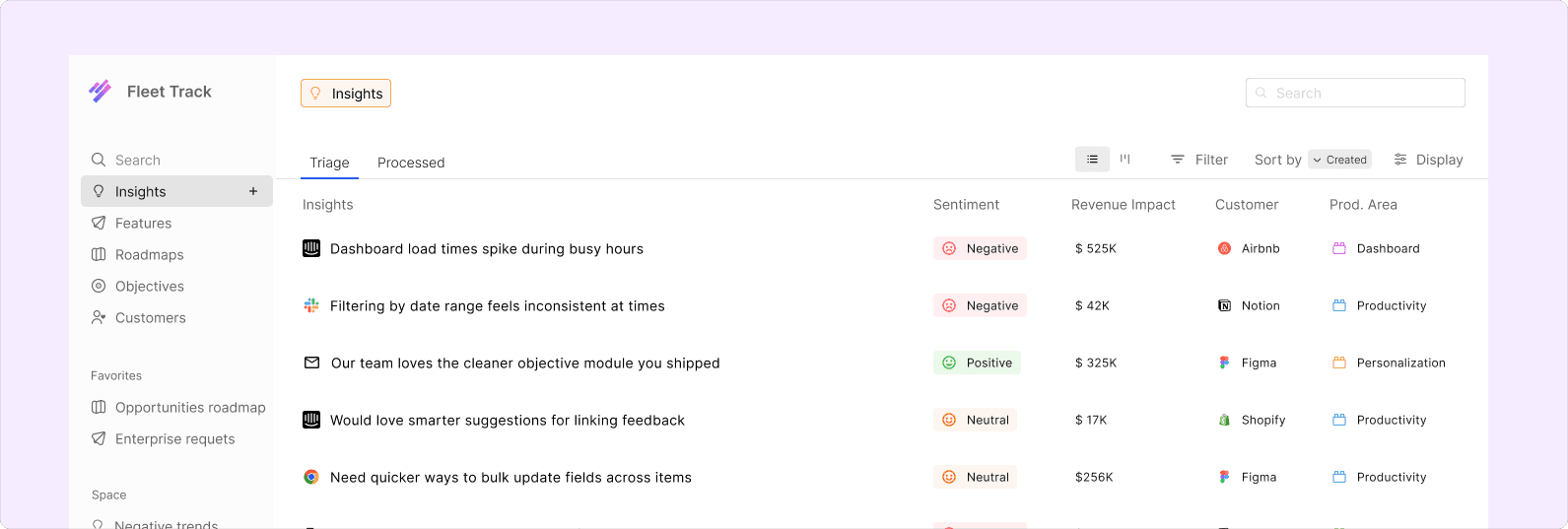
As your SaaS company grows from 50 to 500 employees, the volume of feedback becomes unmanageable. This is where most tools break.
The Problem: You have 1,000+ requests in a "backlog graveyard."
The Agitation: Your PMs spend 10 hours a week "triaging" instead of "discovering." Stakeholders feel ignored, and the roadmap looks like a random list of features.
The Lane Solution: Lane uses Smart Prioritization Frameworks that weight feedback based on your specific business goals. Whether you prioritize by "Retention Impact," "New Revenue," or "Strategic Alignment," Lane keeps the rationale transparent.
Moving from Chisel to Lane: The Logical Transition
With Chisel transitioning into the Pendo ecosystem, it is moving further away from being a "dedicated PM home" and closer to being an "analytics add-on."
Lane is the right product to migrate to because:
It is a Complete Suite: Lane covers the entire journey from feedback ingestion to roadmap visualization.
It is Modern & Growing: Unlike legacy tools or acquired modules, Lane is iterating specifically for the needs of the 2026 PM.
It Complements Your Stack: You don't have to replace Jira or Linear. Lane sits perfectly "upstream," handling the messy discovery work so your dev team gets crystal-clear, validated priorities.
Thinking of making the switch? If you are looking to migrate from Chisel to Lane, our team can help you with the setup and process - just reach out to us at support@laneapp.co.
Conclusion: Focus on What Matters Most
In the world of B2B SaaS, the goal isn't just to "ship more software" - it's to ship the right software. While AI agents can help you write faster, they can't replace the strategic alignment that comes from deep customer context.
Lane provides the clarity, transparency, and customer-focus that scaling teams need to stay ahead of the competition. If you’re looking for a Chisel alternative that feels like a partner in your product strategy rather than just another subscription, Lane is the answer.
Ready to bring customer-centricity back to your roadmap?
Get Started with Lane for Free →
FAQs (People Also Ask)
1. How does Chisel's acquisition by Pendo affect existing users?
Typically, acquisitions lead to a shift in focus toward the parent company’s ecosystem. Users may see Chisel features being bundled into Pendo's broader "Digital Adoption" pricing or see slower development on the standalone product management features.
2. Does Lane use AI for product management?
Yes, but with a focus on utility over hype. Lane uses AI to help synthesize feedback and suggest connections, but it keeps the Product Manager in the driver's seat to ensure strategic alignment.
3. Is Lane suitable for startups and scaling teams?
Absolutely. Lane is designed to scale with you. Its "simple, modern workflows" make it easy for a team of two to start organizing feedback, while its "revenue context" features become indispensable as you grow into the mid-market and enterprise segments.
The product management tool market in 2026 is undergoing a massive consolidation. With Pendo’s recent acquisition of Chisel Labs (February 2026), many product teams are finding themselves at a crossroads. While Chisel was celebrated for its "AI PM Agent," its absorption into the Pendo ecosystem often means shifting from a dedicated, agile discovery tool to a small cog in a large, complex digital adoption platform.
What is the best alternative to Chisel in 2026?
The best Chisel alternative for B2B SaaS teams is Lane. Unlike tools absorbed into larger suites, Lane offers a dedicated, customer-centric discovery and roadmapping environment. It excels at connecting high-value customer feedback directly to revenue context, ensuring your roadmap is driven by business impact rather than just AI-generated noise.
The 2026 Product Dilemma: Why Chisel Users are Looking Elsewhere
For years, Chisel stood out as a lean, AI-native solution for PMs tired of the "Jira clutter." However, the 2026 acquisition by Pendo has introduced new friction points for scaling teams:
Loss of Agility: Being part of a massive enterprise suite like Pendo often results in slower feature updates for the core "discovery" modules.
The "AI Overload" Problem: As noted by industry reports from Airtable (2026), AI is only useful if it’s tied to strategy. Chisel’s heavy focus on "agentic" PRD writing can sometimes lead to a "quantity over quality" trap.
Pricing Complexity: Small to mid-market teams often find Pendo’s enterprise-level pricing structures prohibitive compared to the standalone Chisel experience.
Lane vs. Chisel: A 2026 Comprehensive Comparison
While both tools aim to simplify the life of a Product Manager, they approach the "Product Discovery" problem from different angles. Lane is built specifically for the B2B SaaS lifecycle, where the weight of a single customer's feedback can vary by thousands of dollars in ARR.
Core Philosophy & Excellence
Feature | Chisel (via Pendo) | Lane (laneapp.co) |
Primary Focus | AI-driven task automation (PRDs, notes) | Customer-centric discovery & prioritization |
Revenue Context | Minimal / Indirect | Native: Connects feedback directly to account value |
Ideal For | Teams already using Pendo for analytics | High-growth B2B SaaS scaling discovery |
Workflow | Agentic AI execution | Integrated discovery-to-delivery roadmap |
Speed of Adoption | Moderate (Enterprise setup) | High: Simple, modern, and "plays well" with Jira/Linear |
Why B2B Teams are Moving to Lane
B2B product management is inherently different from B2C. In B2B, you don't just care about how many people want a feature; you care about who wants it.
1. Customer-Centricity by Design
In Chisel, feedback often lives in a siloed "Idea Box." In Lane, every piece of feedback - from a Slack snippet to a Gong transcript - is anchored to a Customer Profile. When you look at a feature request in Lane, you aren't just looking at a title; you're looking at the total ARR of the customers requesting it.
2. Alignment Over Automation
Chisel’s "Agentic AI" focuses on writing the PRD for you. Lane focuses on helping you decide what to write a PRD for. According to SaaSworthy (2026), the biggest pain point for PMs today is "strategy drift." Lane prevents this by keeping business goals and customer needs visible at every step of the prioritization process.
3. Transparent Roadmaps that Build Trust
Scaling B2B companies need to communicate with stakeholders. Lane’s roadmaps aren't just internal project boards; they are communication tools. You can easily share high-level, context-rich roadmaps with your Sales and CS teams so they can close deals with confidence.
The "Lane" Advantage: Solving the Scaling Crisis

As your SaaS company grows from 50 to 500 employees, the volume of feedback becomes unmanageable. This is where most tools break.
The Problem: You have 1,000+ requests in a "backlog graveyard."
The Agitation: Your PMs spend 10 hours a week "triaging" instead of "discovering." Stakeholders feel ignored, and the roadmap looks like a random list of features.
The Lane Solution: Lane uses Smart Prioritization Frameworks that weight feedback based on your specific business goals. Whether you prioritize by "Retention Impact," "New Revenue," or "Strategic Alignment," Lane keeps the rationale transparent.
Moving from Chisel to Lane: The Logical Transition
With Chisel transitioning into the Pendo ecosystem, it is moving further away from being a "dedicated PM home" and closer to being an "analytics add-on."
Lane is the right product to migrate to because:
It is a Complete Suite: Lane covers the entire journey from feedback ingestion to roadmap visualization.
It is Modern & Growing: Unlike legacy tools or acquired modules, Lane is iterating specifically for the needs of the 2026 PM.
It Complements Your Stack: You don't have to replace Jira or Linear. Lane sits perfectly "upstream," handling the messy discovery work so your dev team gets crystal-clear, validated priorities.
Thinking of making the switch? If you are looking to migrate from Chisel to Lane, our team can help you with the setup and process - just reach out to us at support@laneapp.co.
Conclusion: Focus on What Matters Most
In the world of B2B SaaS, the goal isn't just to "ship more software" - it's to ship the right software. While AI agents can help you write faster, they can't replace the strategic alignment that comes from deep customer context.
Lane provides the clarity, transparency, and customer-focus that scaling teams need to stay ahead of the competition. If you’re looking for a Chisel alternative that feels like a partner in your product strategy rather than just another subscription, Lane is the answer.
Ready to bring customer-centricity back to your roadmap?
Get Started with Lane for Free →
FAQs (People Also Ask)
1. How does Chisel's acquisition by Pendo affect existing users?
Typically, acquisitions lead to a shift in focus toward the parent company’s ecosystem. Users may see Chisel features being bundled into Pendo's broader "Digital Adoption" pricing or see slower development on the standalone product management features.
2. Does Lane use AI for product management?
Yes, but with a focus on utility over hype. Lane uses AI to help synthesize feedback and suggest connections, but it keeps the Product Manager in the driver's seat to ensure strategic alignment.
3. Is Lane suitable for startups and scaling teams?
Absolutely. Lane is designed to scale with you. Its "simple, modern workflows" make it easy for a team of two to start organizing feedback, while its "revenue context" features become indispensable as you grow into the mid-market and enterprise segments.
Expected a CTA? We're are working on it.
If you are still not convinced, give lane a try yourself.
Expected a CTA? We're are working on it.
If you are still not convinced, give lane a try yourself.