Feb 2, 2026
Articles
High-Impact Product Discovery Template for B2B SaaS (2026)

Building in B2B SaaS has changed. In 2026, "growth at any cost" is a relic; the new mandate is intelligent, resilient expansion driven by deep customer alignment. Yet, many teams still struggle with "discovery debt" - the gap between what customers say they need and what the product team actually builds.
What is a Product Discovery Template?
A product discovery template is a structured framework used by SaaS teams to identify, validate, and prioritize customer problems before committing to development. It ensures that features are built based on real user evidence and business impact rather than internal opinions or volume-based feedback.
Without a grounded template, teams often fall into the "feature factory" trap—shipping updates that look great on a changelog but fail to move the needle on Net Revenue Retention (NRR).
1. Problem Identification: The "Context First" Phase
How do you identify the right product problems in 2026?
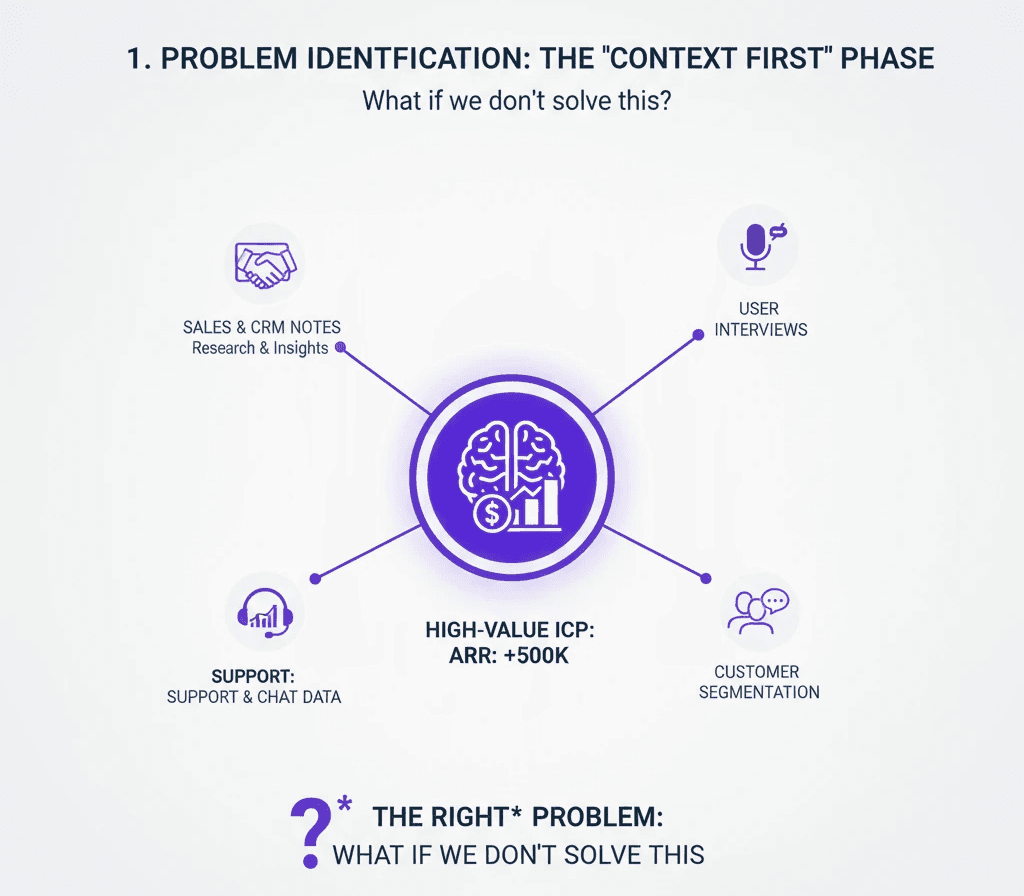
To identify the right problems, B2B teams must move beyond simple request counts. Effective identification involves aggregating feedback from sales, CS, and direct user interviews, then layering it with business context - such as the ARR associated with the request—to ensure the problem is worth solving.
In 2026, market data shows that 60% of businesses are budgeting more for software, but they are also more discerning about value. High-impact discovery starts by asking: “What happens if we don’t solve this?”
Audit Internal Channels: Slack, CRM notes, and support tickets.
Customer Segmentation: Are these requests coming from your Ideal Customer Profile (ICP) or churned accounts?
Revenue Mapping: Use tools to see the dollar value attached to specific pain points.
2. Validation & The "Double Diamond" Approach
What is the best validation framework for SaaS product discovery?
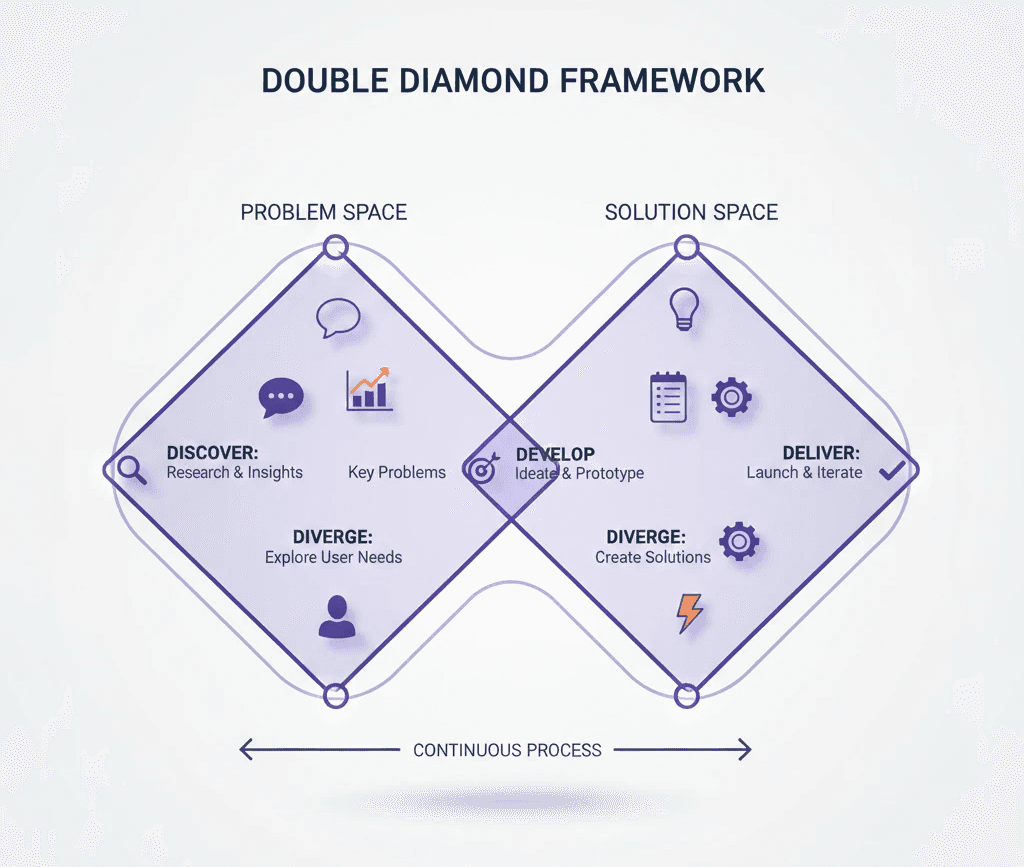
The most effective validation framework is the Double Diamond, which focuses on "Divergent" and "Convergent" thinking. Teams first explore the broad landscape of user needs (Discover/Define) and then narrow down to the most viable, high-impact solutions through rapid prototyping and testing (Develop/Deliver).
According to recent research, B2B private SaaS companies with under $1M ARR are growing at 50% by staying lean and validating fast. Validation isn't just a "yes/no" check; it's about reducing the risk of product failure by ensuring alignment between user behavior and business goals.
The 2026 Validation Checklist:
Desirability: Does the customer actually want this?
Viability: Does this align with our long-term business strategy?
Feasibility: Can we build this within our current technical stack?
Evidence Strength: Is our insight based on 5 interviews or 50?
3. Prioritization: Moving Beyond Volume
How should B2B teams prioritize their product roadmap?
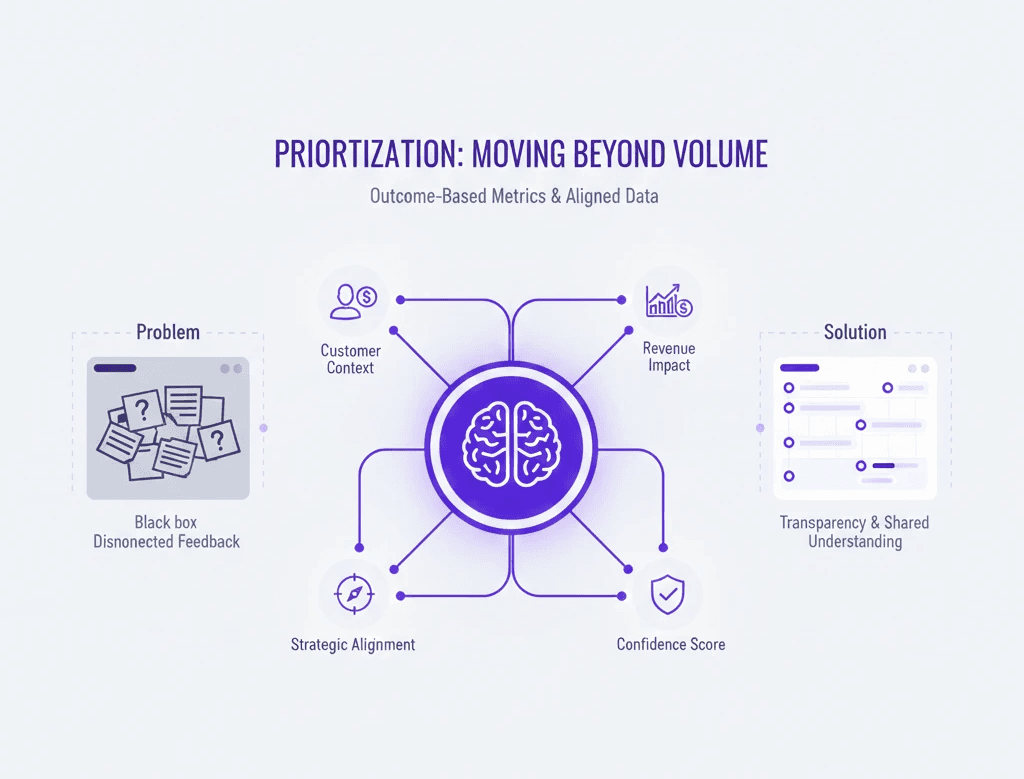
Teams should prioritize based on Outcome-Based Metrics rather than feature volume. By using frameworks like RICE (Reach, Impact, Confidence, Effort) or Value vs. Complexity, and keeping customer context visible, teams can ensure they are solving the most painful problems for their most valuable users.
Feature Priority Factor | Why it Matters in 2026 |
Customer Context | Prevents "loudest voice" bias; keeps focus on the ICP. |
Revenue Impact | Connects product decisions directly to NRR and ARR growth. |
Strategic Alignment | Ensures the team isn't building "random acts of product." |
Confidence Score | Forces teams to admit when they lack sufficient data. |
Why B2B Teams are Moving to Lane
The biggest pain point cited by users of legacy tools like Productboard or Jira Product Discovery is the "black box" effect. Feedback goes in, a roadmap comes out, but the rationale is lost in the middle.
The Problem: General project management tools focus on delivery (the "how" and "when"). They treat feedback as a static list of tickets, stripping away the customer identity and the business urgency behind the request.
The Agitation: When your discovery process is disconnected from your roadmap, your team loses trust. Sales doesn't know why a key prospect's request was deprioritized, and Product doesn't know which features will actually drive expansion.
The Lane Solution: Lane is the "Lane" for your product strategy. It keeps the discovery and planning phases natively connected.
Customer-Centric by Design: Feedback isn't just a text field; it’s tied to specific customers and their revenue value.
Transparent Rationale: Every item on your roadmap in Lane is backed by the original feedback and discovery notes.
Modern Workflow: It’s built for the speed of 2026 SaaS, making it easy to adopt without replacing your entire stack.
Conclusion: The Roadmap is a Narrative
A product discovery template is only as good as the outcomes it produces. In 2026, the goal is to build a product that is customer-centric by design and aligned by data. By moving away from generic tools and adopting a discovery-first mindset, you ensure your team focuses on what truly matters.
Ready to turn your feedback into a high-impact roadmap?
Explore how Lane simplifies product discovery for scaling B2B teams
FAQs (People Also Ask)
1. What is the difference between product discovery and product delivery?
Product discovery focuses on "building the right thing" by identifying and validating user needs. Product delivery focuses on "building the thing right" through coding, testing, and shipping.
2. How often should we conduct product discovery?
Discovery should be a continuous process, not a one-time event. Modern SaaS teams dedicate a portion of every sprint to discovery activities to stay ahead of market shifts.
3. What are the best tools for product discovery in 2026?
Specialized discovery tools like Lane are preferred for B2B teams who need to keep customer context and revenue data visible. For general task management, Jira or Linear remain industry standards.
4. How do I get stakeholder buy-in for a discovery-first approach?
Show them the cost of failure. Link missed revenue or churned accounts to features that were shipped without proper discovery to demonstrate the ROI of a structured template.
Building in B2B SaaS has changed. In 2026, "growth at any cost" is a relic; the new mandate is intelligent, resilient expansion driven by deep customer alignment. Yet, many teams still struggle with "discovery debt" - the gap between what customers say they need and what the product team actually builds.
What is a Product Discovery Template?
A product discovery template is a structured framework used by SaaS teams to identify, validate, and prioritize customer problems before committing to development. It ensures that features are built based on real user evidence and business impact rather than internal opinions or volume-based feedback.
Without a grounded template, teams often fall into the "feature factory" trap—shipping updates that look great on a changelog but fail to move the needle on Net Revenue Retention (NRR).
1. Problem Identification: The "Context First" Phase

How do you identify the right product problems in 2026?
To identify the right problems, B2B teams must move beyond simple request counts. Effective identification involves aggregating feedback from sales, CS, and direct user interviews, then layering it with business context - such as the ARR associated with the request—to ensure the problem is worth solving.
In 2026, market data shows that 60% of businesses are budgeting more for software, but they are also more discerning about value. High-impact discovery starts by asking: “What happens if we don’t solve this?”
Audit Internal Channels: Slack, CRM notes, and support tickets.
Customer Segmentation: Are these requests coming from your Ideal Customer Profile (ICP) or churned accounts?
Revenue Mapping: Use tools to see the dollar value attached to specific pain points.
2. Validation & The "Double Diamond" Approach

What is the best validation framework for SaaS product discovery?
The most effective validation framework is the Double Diamond, which focuses on "Divergent" and "Convergent" thinking. Teams first explore the broad landscape of user needs (Discover/Define) and then narrow down to the most viable, high-impact solutions through rapid prototyping and testing (Develop/Deliver).
According to recent research, B2B private SaaS companies with under $1M ARR are growing at 50% by staying lean and validating fast. Validation isn't just a "yes/no" check; it's about reducing the risk of product failure by ensuring alignment between user behavior and business goals.
The 2026 Validation Checklist:
Desirability: Does the customer actually want this?
Viability: Does this align with our long-term business strategy?
Feasibility: Can we build this within our current technical stack?
Evidence Strength: Is our insight based on 5 interviews or 50?
3. Prioritization: Moving Beyond Volume

How should B2B teams prioritize their product roadmap?
Teams should prioritize based on Outcome-Based Metrics rather than feature volume. By using frameworks like RICE (Reach, Impact, Confidence, Effort) or Value vs. Complexity, and keeping customer context visible, teams can ensure they are solving the most painful problems for their most valuable users.
Feature Priority Factor | Why it Matters in 2026 |
Customer Context | Prevents "loudest voice" bias; keeps focus on the ICP. |
Revenue Impact | Connects product decisions directly to NRR and ARR growth. |
Strategic Alignment | Ensures the team isn't building "random acts of product." |
Confidence Score | Forces teams to admit when they lack sufficient data. |
Why B2B Teams are Moving to Lane
The biggest pain point cited by users of legacy tools like Productboard or Jira Product Discovery is the "black box" effect. Feedback goes in, a roadmap comes out, but the rationale is lost in the middle.
The Problem: General project management tools focus on delivery (the "how" and "when"). They treat feedback as a static list of tickets, stripping away the customer identity and the business urgency behind the request.
The Agitation: When your discovery process is disconnected from your roadmap, your team loses trust. Sales doesn't know why a key prospect's request was deprioritized, and Product doesn't know which features will actually drive expansion.
The Lane Solution: Lane is the "Lane" for your product strategy. It keeps the discovery and planning phases natively connected.
Customer-Centric by Design: Feedback isn't just a text field; it’s tied to specific customers and their revenue value.
Transparent Rationale: Every item on your roadmap in Lane is backed by the original feedback and discovery notes.
Modern Workflow: It’s built for the speed of 2026 SaaS, making it easy to adopt without replacing your entire stack.
Conclusion: The Roadmap is a Narrative
A product discovery template is only as good as the outcomes it produces. In 2026, the goal is to build a product that is customer-centric by design and aligned by data. By moving away from generic tools and adopting a discovery-first mindset, you ensure your team focuses on what truly matters.
Ready to turn your feedback into a high-impact roadmap?
Explore how Lane simplifies product discovery for scaling B2B teams
FAQs (People Also Ask)
1. What is the difference between product discovery and product delivery?
Product discovery focuses on "building the right thing" by identifying and validating user needs. Product delivery focuses on "building the thing right" through coding, testing, and shipping.
2. How often should we conduct product discovery?
Discovery should be a continuous process, not a one-time event. Modern SaaS teams dedicate a portion of every sprint to discovery activities to stay ahead of market shifts.
3. What are the best tools for product discovery in 2026?
Specialized discovery tools like Lane are preferred for B2B teams who need to keep customer context and revenue data visible. For general task management, Jira or Linear remain industry standards.
4. How do I get stakeholder buy-in for a discovery-first approach?
Show them the cost of failure. Link missed revenue or churned accounts to features that were shipped without proper discovery to demonstrate the ROI of a structured template.
Expected a CTA? We're are working on it.
If you are still not convinced, give lane a try yourself.
Expected a CTA? We're are working on it.
If you are still not convinced, give lane a try yourself.