Jan 9, 2026

Articles

The 6 best B2B SaaS product platforms for strategy and roadmaps in 2026

The 6 best B2B SaaS product platforms for strategy and roadmaps in 2026

Building a great B2B SaaS product is never easy. Your team is juggling customer feedback, business goals, and a development roadmap that feels like it's a mile long. When all that info is spread across different apps and spreadsheets, making the right call on what to build next can feel like a shot in the dark.

Valuable insights get lost in old Slack threads, priorities are set by the loudest person in the room, and your roadmap becomes an outdated document no one trusts. This often leads to building features that nobody really asked for.

This is where modern product management platforms come in. They create a single source of truth, a strategic layer that connects the "why" behind your work to the "what" you actually build. This guide breaks down the top B2B SaaS product platforms for strategy and roadmaps, comparing their strengths, weaknesses, and who they're best for, so you can start building with more confidence.

What are B2B SaaS product platforms and what do they do?

To be clear, these aren't just another project management tool. You probably already use something like Jira or Linear to manage sprints and ship code. Those tools are great for the "how" of building software. Product platforms, on the other hand, are the strategic layer that sits on top of them to help you figure out the "what" and the "why."

Their main job is to gather all your inputs—customer feedback, feature requests, market research—and tie them directly to your high-level business goals. This gives you a clear, data-informed plan for what your team should work on next.

The best platforms are built on three core pillars:

  1. Feedback aggregation from all the places your customers and team communicate.

  2. Robust prioritization frameworks to help you make difficult decisions.

  3. Flexible roadmapping capabilities to get everyone aligned.
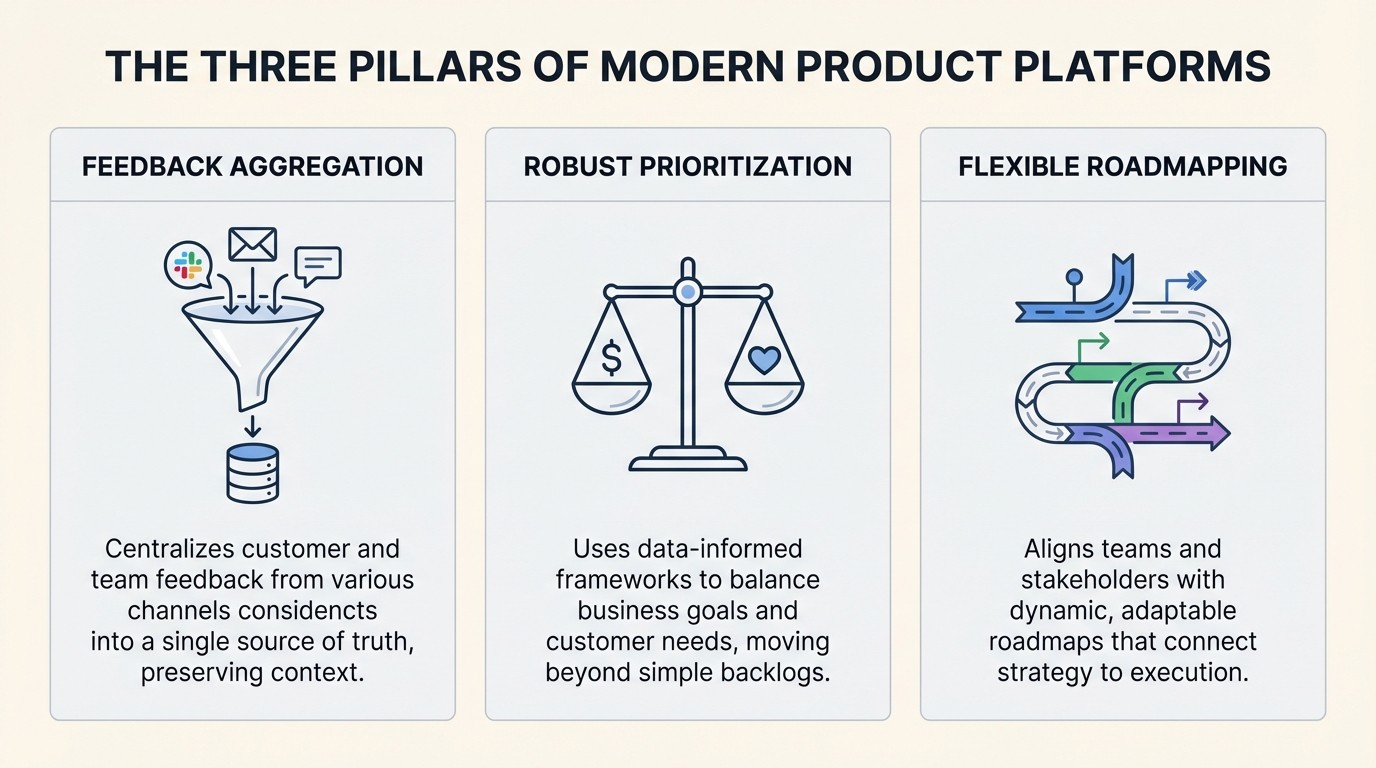
    An infographic showing the three pillars of B2B SaaS product platforms strategy roadmaps: feedback aggregation, robust prioritization, and flexible roadmapping.

An infographic showing the three pillars of B2B SaaS product platforms strategy roadmaps: feedback aggregation, robust prioritization, and flexible roadmapping.

Many tools in this space, like Lane, are built to work with your existing delivery tools, not against them. They bring clarity and context before a single line of code is written, making sure every feature you ship is one that actually matters.

Our criteria for choosing the best B2B SaaS product platforms

To build this list, we looked beyond simple feature checklists. We focused on what modern product teams really need and measured each tool against a few key criteria.

  • Feedback and insight management: Can it pull in feedback from places like Slack, Intercom, and email without losing the original context? The best tools don't just collect feedback; they use intelligence to automatically spot themes, analyze sentiment, and show you what’s important.

  • Strategic prioritization: Does it help you move beyond a simple, flat backlog? We looked for platforms that let you prioritize work based on your strategic goals, key customer segments, and business impact (like which features will drive the most revenue).

  • Roadmap flexibility: A roadmap isn't one-size-fits-all. A great platform lets you create and share different views, like a high-level timeline for your executive team, a swimlane view for cross-functional planning, or a simple Now-Next-Later board for your customers.

  • Integration ecosystem: How smoothly does it play with the tools your team already uses? A smooth workflow between your product platform and execution tools like Jira or Linear is a must-have. It's all about connecting the discovery phase to the delivery phase.

  • User experience and security: Is the interface intuitive? Can your team get up and running quickly without needing a month of training? We prioritized tools that deliver value fast, backed by enterprise-grade security you can trust.
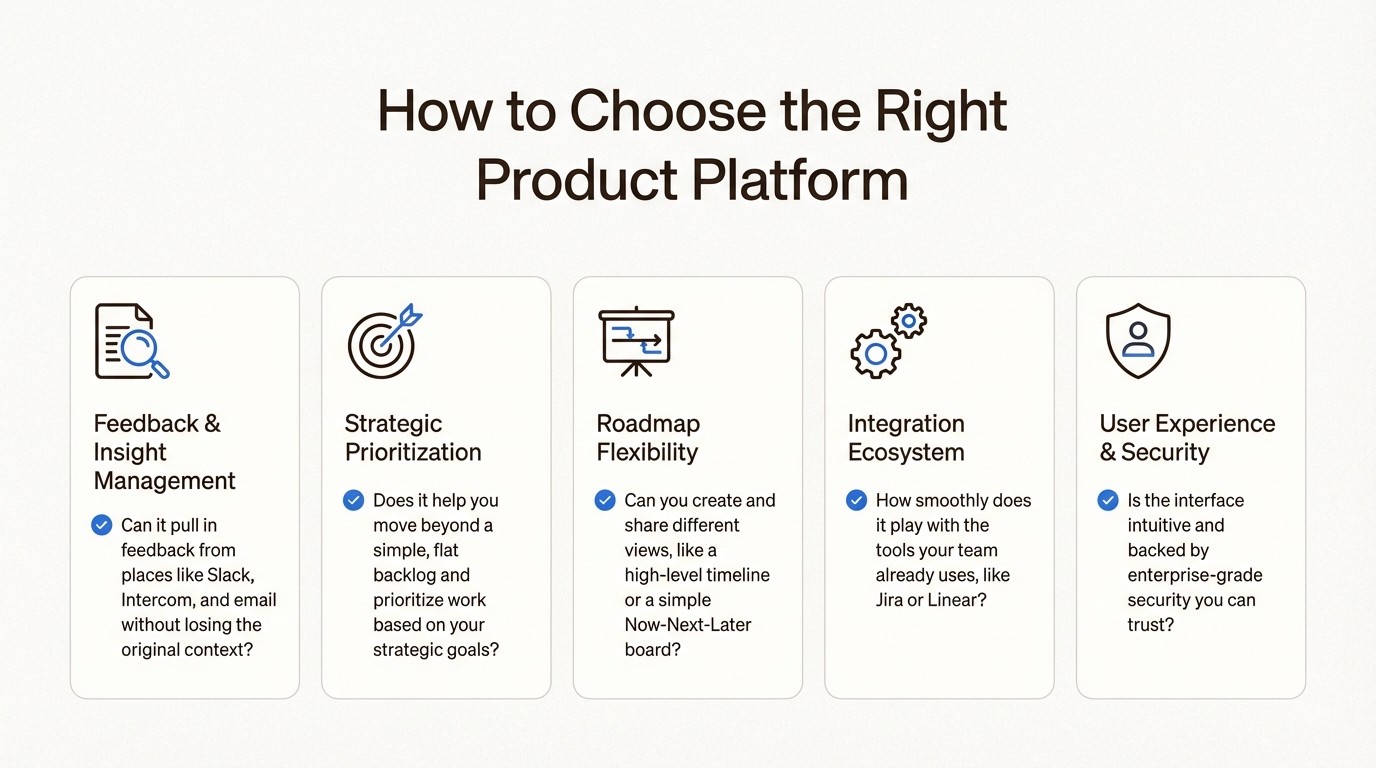
    An infographic detailing the key criteria for choosing B2B SaaS product platforms strategy roadmaps, including feedback management, prioritization, and integrations.

An infographic detailing the key criteria for choosing B2B SaaS product platforms strategy roadmaps, including feedback management, prioritization, and integrations.

A quick comparison of the top B2B SaaS product platforms

To give you a quick overview, here's how our top 6 platforms stack up against each other.

Platform

Best For

Key Features

Pricing Model

Lane

Startups & SMBs needing an all-in-one strategy layer.

AI-powered feedback analysis, full-context Slack capture, OKR alignment, public roadmaps.

Freemium & Per User

Productboard

Mid-market to enterprise teams needing a mature feedback hub.

Centralized feedback, customer portals, user impact scoring.

Freemium & Per User ("Maker")

Aha!

Enterprises wanting a comprehensive product development suite.

Modular suite (Roadmaps, Ideas, Develop), extensive customization, enterprise reporting.

Per User (Modular)

Strategic Roadmaps (Roadmunk)

Teams focused primarily on roadmap visualization and communication.

Boardroom-ready templates, timeline and swimlane views, idea management.

Per User (Free Trial)

ProdPad

Teams following a lean product management methodology.

Now-Next-Later roadmaps, AI CoPilot, idea and feedback management.

Per User (Modular)

Canny

Companies focused on building a public feedback community.

Public feedback boards, voting, changelogs, Autopilot AI.

Freemium & Usage-based

A closer look at the 6 best B2B SaaS product platforms

Now that you've seen the high-level summary, let's dive deeper into what makes each of these platforms unique and who they're really built for.

Lane
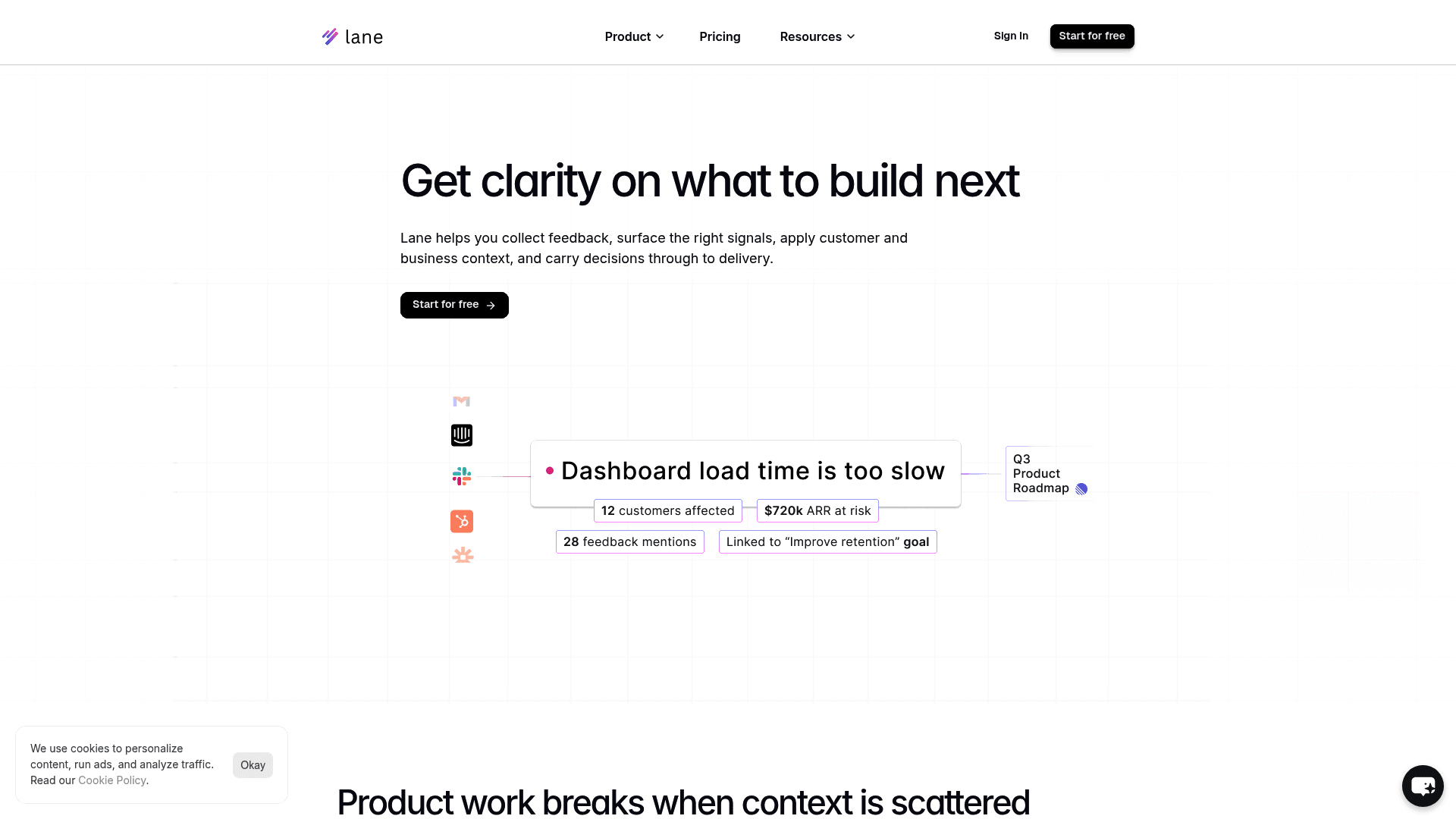

A screenshot of the Lane homepage, which is one of the top B2B SaaS product platforms strategy roadmaps.

A screenshot of the Lane homepage, which is one of the top B2B SaaS product platforms strategy roadmaps.

Why it's on the list: Lane is built from the ground up to be an intelligent layer for modern product teams. It is designed to capture the full context of conversations from tools like Slack and Intercom, then uses AI to automatically analyze sentiment and summarize key themes. This allows product decisions to be based on more detailed data.

Pros: Lane's workflow is designed to connect strategy to execution. It enables linking feedback to specific customer segments and revenue impact to provide context for prioritization.

Cons: As a newer platform, its integration ecosystem is still growing, with features like a HubSpot sync and Public API listed as "coming soon." It is also not designed for companies in heavily regulated industries that require certifications like HIPAA.

Pricing:

  • Starter: Free for up to 3 collaborators and 100 insights.

  • Business: Starts at $19 per user/month (billed annually) for unlimited insights, collaborators, and advanced integrations.

Productboard
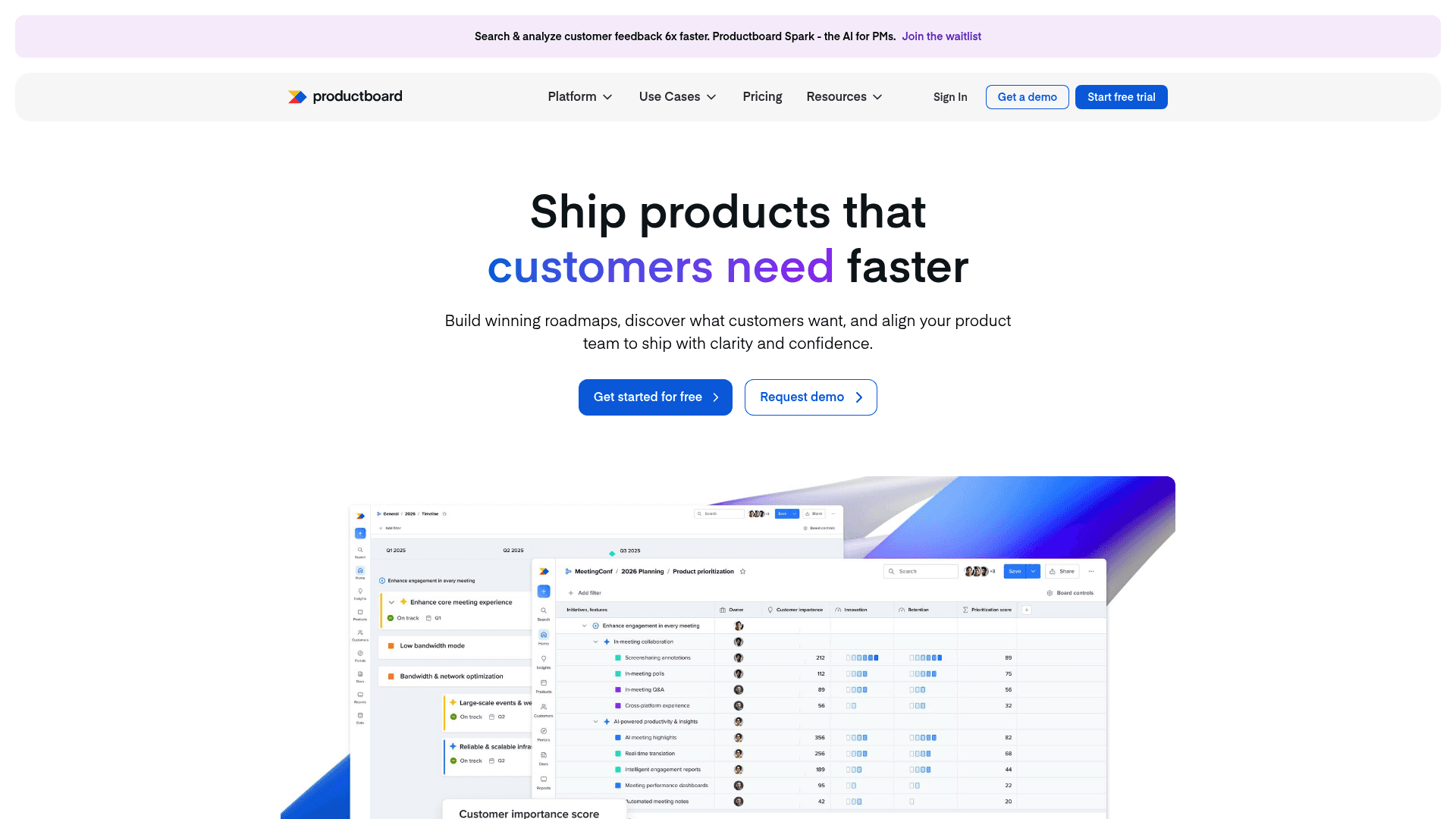

A screenshot of the Productboard homepage, a popular choice for B2B SaaS product platforms strategy roadmaps.

A screenshot of the Productboard homepage, a popular choice for B2B SaaS product platforms strategy roadmaps.

Why it's on the list: Productboard is a solution used by over 6,000 companies for managing customer feedback in one central hub. It's a solid choice for larger teams that need to manage a high volume of insights from lots of different channels and validate ideas using its customer portal.

Pros: Productboard’s main strengths are its mature feature set for feedback management and its user impact scoring, which helps with prioritization.

Cons: Some users find the interface feels a bit crowded, and the complexity can lead to a steep learning curve. It can also get pricey quickly, and some users find that the workflow between the platform and delivery tools could be more streamlined.

Pricing:

  • Starter: A free plan with limits on feedback notes.

  • Essentials: Starts at $19 per maker/month (billed annually).

  • Pro: Starts at $59 per maker/month (billed annually).

Aha!
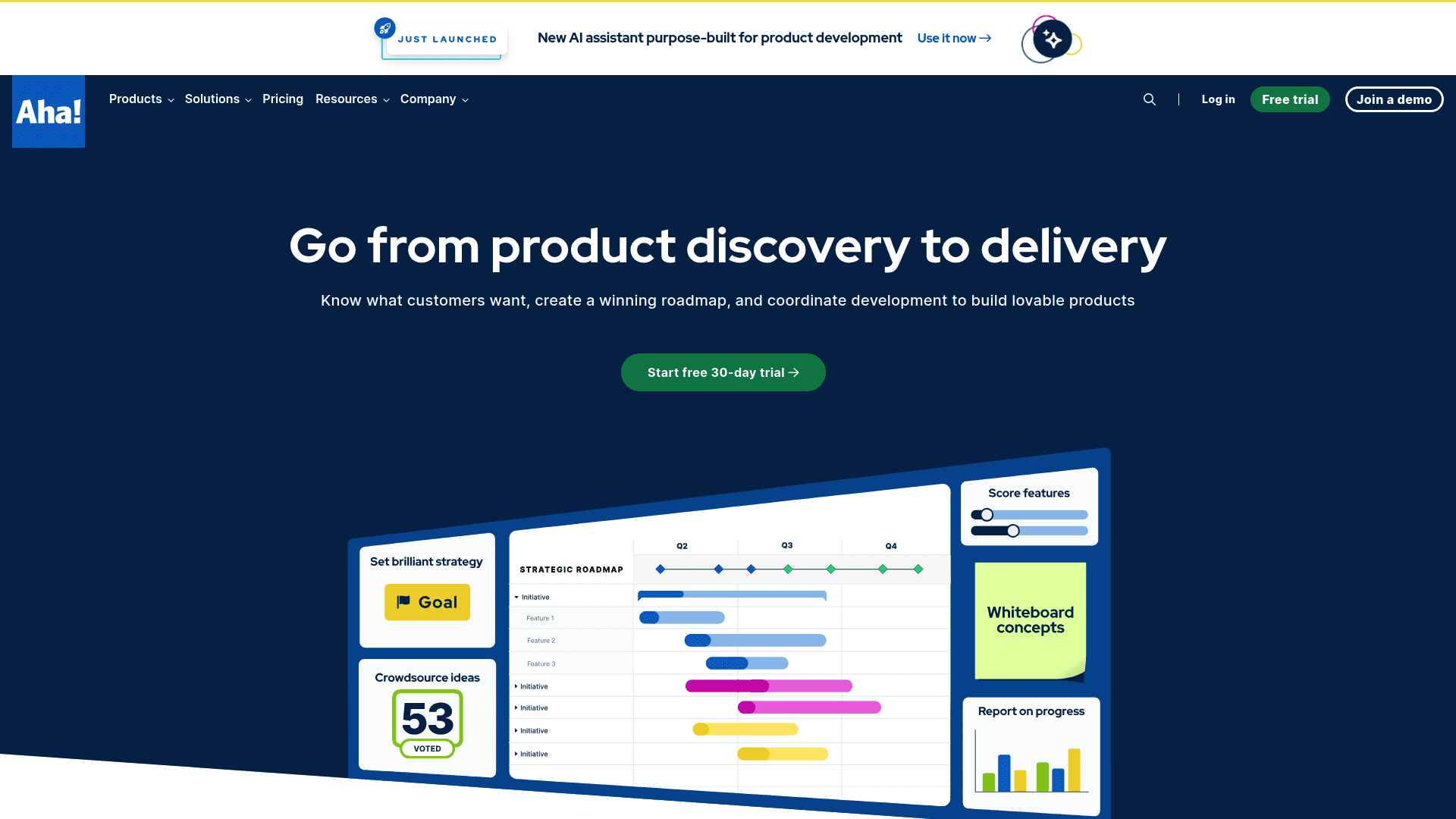

A screenshot of the Aha! homepage, a comprehensive suite for B2B SaaS product platforms strategy roadmaps.

A screenshot of the Aha! homepage, a comprehensive suite for B2B SaaS product platforms strategy roadmaps.

Why it's on the list: Aha! offers a large suite of tools covering the entire product development lifecycle, making it a comprehensive option for large enterprises. It is used by over 1,000,000 product builders and provides everything from high-level strategy and idea management down to detailed feature planning and its own agile development boards.

Pros: The platform is incredibly feature-rich and customizable, and it comes with strong security credentials like ISO 27001 certification.

Cons: The main hurdle with Aha! is its complexity and the steep learning curve that comes with it, which can be overwhelming for smaller, nimbler teams. Its modular pricing means costs can add up fast, and it can feel like a heavy, duplicative system for teams happy with their existing execution tools.

Pricing:

  • Aha! Roadmaps: Starts at $59 per user/month.

  • Additional modules like Aha! Ideas and Aha! Develop are priced separately.

Strategic Roadmaps (formerly Roadmunk)

Why it's on the list: Now part of the Tempo family of products, Strategic Roadmaps excels at creating clear and visually appealing roadmaps. If your biggest challenge is communicating your product strategy effectively to stakeholders and executives, this is an ideal choice.

Pros: Its key strength lies in the flexibility and polish of its "boardroom-ready" roadmap templates. You can easily switch between timeline, swimlane, and other views to tell the right story to the right audience.

Cons: Its features for capturing feedback and ideas are less extensive than platforms focused primarily on insight analysis. It is primarily a roadmapping tool with additional feedback features.

Pricing: A 14-day free trial is available, but specific pricing isn't publicly listed on their website. You'll have to get in touch with them for a quote.

ProdPad
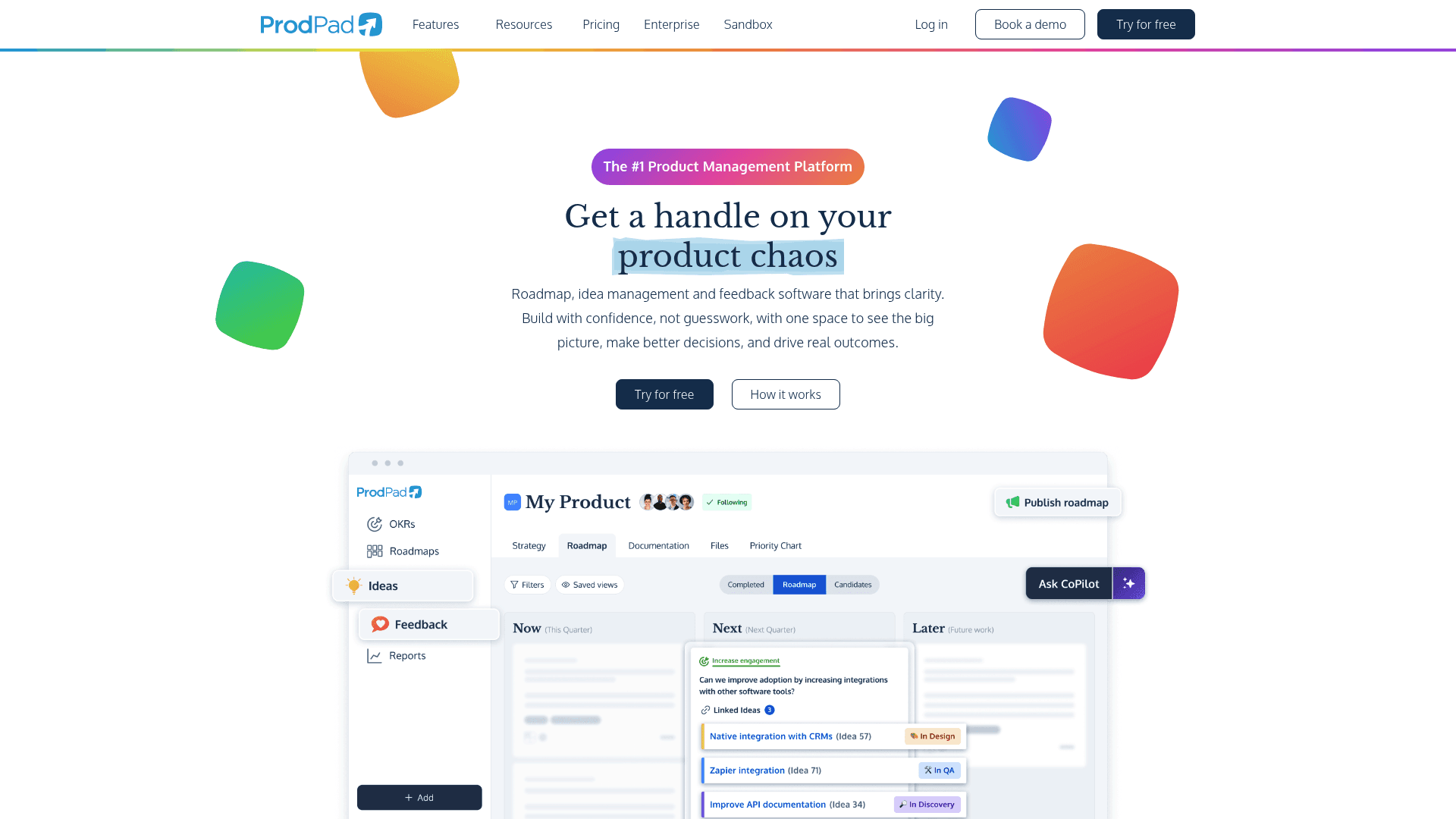

A screenshot of the ProdPad homepage, a lean management tool for B2B SaaS product platforms strategy roadmaps.

A screenshot of the ProdPad homepage, a lean management tool for B2B SaaS product platforms strategy roadmaps.

Why it's on the list: ProdPad is built around lean product management principles, which makes it a great fit for teams that are focused on outcomes over outputs. It’s designed to help you manage a backlog of ideas, validate them with experiments, and connect them to an outcome-based "Now, Next, Later" roadmap.

Pros: The platform is great for fostering a culture of experimentation and making sure all your work ties back to strategic OKRs. Its AI CoPilot is a helpful feature that can assist with tasks like summarizing feedback and drafting documentation.

Cons: Its roadmaps intentionally don't have specific timelines. This can be a challenge when you're trying to communicate with stakeholders who need firm, date-based commitments.

Pricing:

  • Roadmaps Essentials: Starts at $24 per editor/month (billed annually).

  • Ideas and Feedback modules are priced separately.

Canny
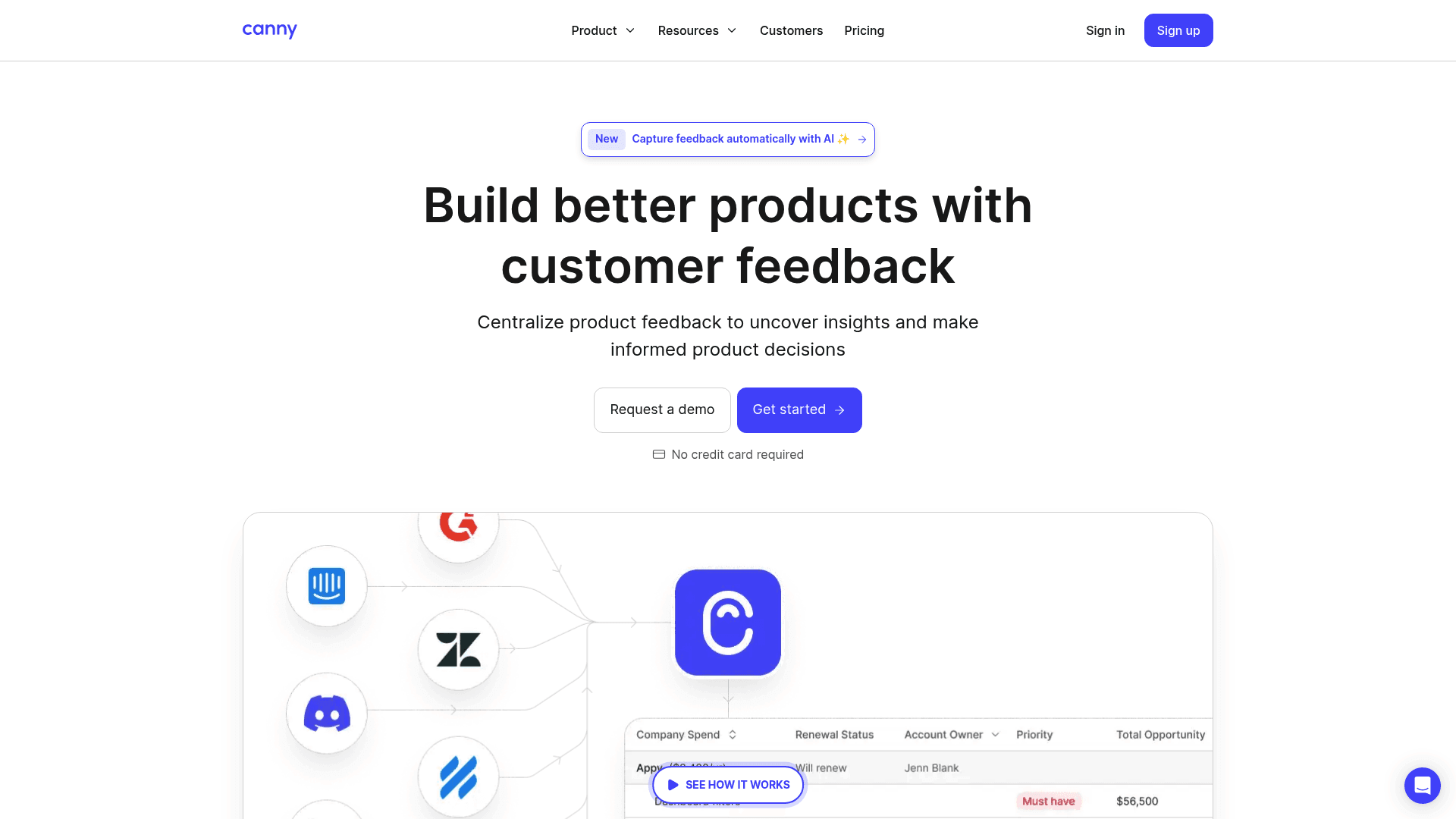

A screenshot of the Canny homepage, a user feedback tool used for B2B SaaS product platforms strategy roadmaps.

A screenshot of the Canny homepage, a user feedback tool used for B2B SaaS product platforms strategy roadmaps.

Why it's on the list: Canny has found its niche by focusing on managing public user feedback. It gives your customers a place to submit feature requests, vote on ideas from other users, and stay in the loop with a public changelog.

Pros: Its main strength is simplicity, making it easy for users to engage. It provides product teams a clear signal of community requests.

Cons: The platform is primarily a feedback collection tool and does not have the same level of functionality for connecting feedback to broader product strategy, business goals, or customer revenue data as some other comprehensive platforms.

Pricing:

  • Free: Includes up to 25 tracked users.

  • Core: Starts at $19/month (billed annually) and scales based on users.

How to choose the right B2B SaaS product platform for your team

Choosing a new tool is more than just checking boxes on a feature list. It’s about finding a platform whose philosophy matches your team’s workflow and stage of growth. To help you narrow it down, ask yourself a few key questions.

  • Where does your most valuable feedback live? If your best insights come from a public community forum, a tool like Canny might be all you need. But if that feedback is currently buried deep in Slack threads, Intercom chats, and sales call notes, you'll need a platform like Lane that has strong integrations and is built to preserve that precious context.

  • Are you looking to replace or augment your current tools? Some platforms try to be an all-in-one solution that includes task management. If your engineering team is already all-in on Jira or Linear, you should look for a platform that integrates deeply with those tools, not one that tries to kick them out. This avoids creating friction and makes it much more likely that everyone will actually use the new tool.

  • How do you need to communicate your strategy? Do you need super polished, timeline-based roadmaps to present in board meetings? A tool like Strategic Roadmaps is perfect for that. Or is it more important to have a flexible, shareable roadmap that connects directly to customer needs and business objectives?

  • How much time can you realistically invest in setup? Big, enterprise-grade tools like Aha! are incredibly powerful, but they often require weeks of configuration to get right. Newer, more opinionated platforms are designed to deliver value almost immediately, which is a huge advantage for fast-moving teams who can't afford to slow down.
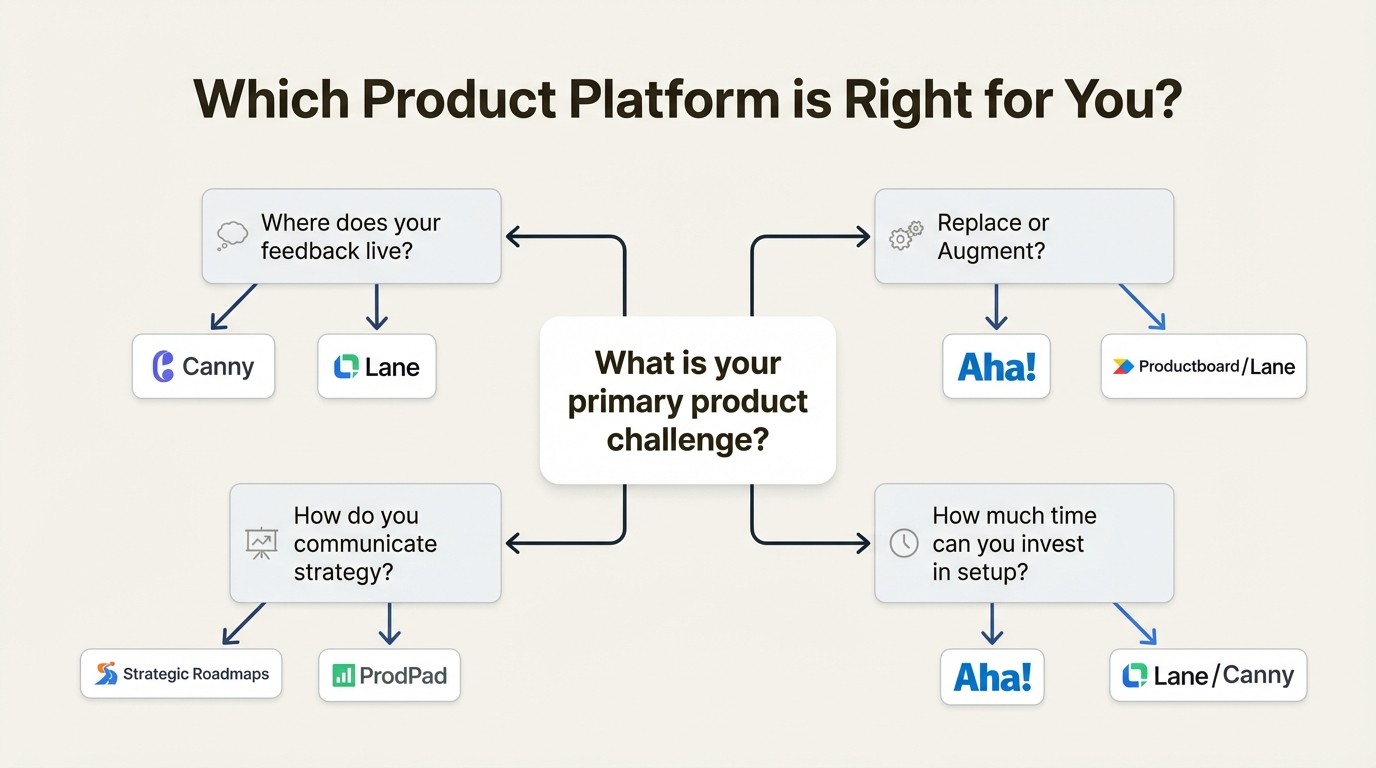
    A flowchart infographic to help teams choose the right B2B SaaS product platforms strategy roadmaps based on their specific needs.

A flowchart infographic to help teams choose the right B2B SaaS product platforms strategy roadmaps based on their specific needs.

This video breaks down exactly how advanced teams build Agile Roadmaps that actually work for B2B products.

From scattered data to strategic clarity

The right B2B SaaS product platform can genuinely change how your team operates. It moves you from a world of guesswork to a more strategic, data-informed way of working. It’s all about closing the loop between what your customers need, what the business wants, and what your team ultimately builds.

The goal is to replace ambiguity with clarity, making sure every single feature you ship has a clear purpose and a measurable impact. A platform that connects your strategy and roadmaps isn't just a nice-to-have; it's essential for making that happen.

Ready to bring intelligence and clarity to your product strategy? Lane provides a seamless workflow from feedback to roadmap, all while working with the tools you and your team already love. Start for free today and see how you can build better products, faster.

Frequently Asked Questions

What is the main purpose of using a B2B SaaS product platform for strategy and roadmaps?

They help you connect all your customer feedback and business goals to what you actually build. Instead of guessing, you get a clear, data-driven plan that links your high-level strategy to your day-to-day [development roadmap](https://valcon.com/insights/saas-product-roadmap/), ensuring you're working on features that matter.

How do these product platforms integrate with development tools like Jira?

Most of these platforms are designed to sit on top of tools like Jira or Linear, not replace them. They handle the "why" and "what" (strategy and planning) and then [push the work into development tools](https://www.laneapp.co/linear-sync), which handle the "how" (execution). This creates a seamless flow from initial idea to final release.

Can small startups benefit from these platforms?

Absolutely. For startups, focus is everything. Using a product platform for strategy and roadmaps helps small teams make sure their limited resources are spent on features that will have the [biggest impact on customers](https://verycreatives.com/blog/crafting-saas-product-roadmap) and revenue, preventing costly mistakes.

What are the key features to look for in a B2B SaaS product platform?

Look for three core things: strong [feedback aggregation](https://www.prodpad.com/features/customer-feedback/) (from places like Slack and Intercom), flexible prioritization frameworks (to help you make tough decisions), and dynamic roadmapping tools that you can share with different audiences. Good integrations are also essential.

How can you measure the ROI of investing in a product platform?

You can measure ROI by looking at things like increased development efficiency (less wasted work), better customer retention (because you're building what they need), and faster decision-making. Ultimately, it's about shipping more impactful features and fewer duds.

Are there free product platforms available for teams on a budget?

Yes, several platforms offer [free or freemium plans](https://www.laneapp.co/pricing). For example, Lane has a free Starter plan that's great for smaller teams. These plans are a good way to get started and see how the tool fits your workflow before committing to a paid subscription.

Building a great B2B SaaS product is never easy. Your team is juggling customer feedback, business goals, and a development roadmap that feels like it's a mile long. When all that info is spread across different apps and spreadsheets, making the right call on what to build next can feel like a shot in the dark.

Valuable insights get lost in old Slack threads, priorities are set by the loudest person in the room, and your roadmap becomes an outdated document no one trusts. This often leads to building features that nobody really asked for.

This is where modern product management platforms come in. They create a single source of truth, a strategic layer that connects the "why" behind your work to the "what" you actually build. This guide breaks down the top B2B SaaS product platforms for strategy and roadmaps, comparing their strengths, weaknesses, and who they're best for, so you can start building with more confidence.

What are B2B SaaS product platforms and what do they do?

To be clear, these aren't just another project management tool. You probably already use something like Jira or Linear to manage sprints and ship code. Those tools are great for the "how" of building software. Product platforms, on the other hand, are the strategic layer that sits on top of them to help you figure out the "what" and the "why."

Their main job is to gather all your inputs—customer feedback, feature requests, market research—and tie them directly to your high-level business goals. This gives you a clear, data-informed plan for what your team should work on next.

The best platforms are built on three core pillars:

  1. Feedback aggregation from all the places your customers and team communicate.

  2. Robust prioritization frameworks to help you make difficult decisions.

  3. Flexible roadmapping capabilities to get everyone aligned.

    An infographic showing the three pillars of B2B SaaS product platforms strategy roadmaps: feedback aggregation, robust prioritization, and flexible roadmapping.

An infographic showing the three pillars of B2B SaaS product platforms strategy roadmaps: feedback aggregation, robust prioritization, and flexible roadmapping.

Many tools in this space, like Lane, are built to work with your existing delivery tools, not against them. They bring clarity and context before a single line of code is written, making sure every feature you ship is one that actually matters.

Our criteria for choosing the best B2B SaaS product platforms

To build this list, we looked beyond simple feature checklists. We focused on what modern product teams really need and measured each tool against a few key criteria.

  • Feedback and insight management: Can it pull in feedback from places like Slack, Intercom, and email without losing the original context? The best tools don't just collect feedback; they use intelligence to automatically spot themes, analyze sentiment, and show you what’s important.

  • Strategic prioritization: Does it help you move beyond a simple, flat backlog? We looked for platforms that let you prioritize work based on your strategic goals, key customer segments, and business impact (like which features will drive the most revenue).

  • Roadmap flexibility: A roadmap isn't one-size-fits-all. A great platform lets you create and share different views, like a high-level timeline for your executive team, a swimlane view for cross-functional planning, or a simple Now-Next-Later board for your customers.

  • Integration ecosystem: How smoothly does it play with the tools your team already uses? A smooth workflow between your product platform and execution tools like Jira or Linear is a must-have. It's all about connecting the discovery phase to the delivery phase.

  • User experience and security: Is the interface intuitive? Can your team get up and running quickly without needing a month of training? We prioritized tools that deliver value fast, backed by enterprise-grade security you can trust.

    An infographic detailing the key criteria for choosing B2B SaaS product platforms strategy roadmaps, including feedback management, prioritization, and integrations.

An infographic detailing the key criteria for choosing B2B SaaS product platforms strategy roadmaps, including feedback management, prioritization, and integrations.

A quick comparison of the top B2B SaaS product platforms

To give you a quick overview, here's how our top 6 platforms stack up against each other.

Platform

Best For

Key Features

Pricing Model

Lane

Startups & SMBs needing an all-in-one strategy layer.

AI-powered feedback analysis, full-context Slack capture, OKR alignment, public roadmaps.

Freemium & Per User

Productboard

Mid-market to enterprise teams needing a mature feedback hub.

Centralized feedback, customer portals, user impact scoring.

Freemium & Per User ("Maker")

Aha!

Enterprises wanting a comprehensive product development suite.

Modular suite (Roadmaps, Ideas, Develop), extensive customization, enterprise reporting.

Per User (Modular)

Strategic Roadmaps (Roadmunk)

Teams focused primarily on roadmap visualization and communication.

Boardroom-ready templates, timeline and swimlane views, idea management.

Per User (Free Trial)

ProdPad

Teams following a lean product management methodology.

Now-Next-Later roadmaps, AI CoPilot, idea and feedback management.

Per User (Modular)

Canny

Companies focused on building a public feedback community.

Public feedback boards, voting, changelogs, Autopilot AI.

Freemium & Usage-based

A closer look at the 6 best B2B SaaS product platforms

Now that you've seen the high-level summary, let's dive deeper into what makes each of these platforms unique and who they're really built for.

Lane


A screenshot of the Lane homepage, which is one of the top B2B SaaS product platforms strategy roadmaps.

A screenshot of the Lane homepage, which is one of the top B2B SaaS product platforms strategy roadmaps.

Why it's on the list: Lane is built from the ground up to be an intelligent layer for modern product teams. It is designed to capture the full context of conversations from tools like Slack and Intercom, then uses AI to automatically analyze sentiment and summarize key themes. This allows product decisions to be based on more detailed data.

Pros: Lane's workflow is designed to connect strategy to execution. It enables linking feedback to specific customer segments and revenue impact to provide context for prioritization.

Cons: As a newer platform, its integration ecosystem is still growing, with features like a HubSpot sync and Public API listed as "coming soon." It is also not designed for companies in heavily regulated industries that require certifications like HIPAA.

Pricing:

  • Starter: Free for up to 3 collaborators and 100 insights.

  • Business: Starts at $19 per user/month (billed annually) for unlimited insights, collaborators, and advanced integrations.

Productboard


A screenshot of the Productboard homepage, a popular choice for B2B SaaS product platforms strategy roadmaps.

A screenshot of the Productboard homepage, a popular choice for B2B SaaS product platforms strategy roadmaps.

Why it's on the list: Productboard is a solution used by over 6,000 companies for managing customer feedback in one central hub. It's a solid choice for larger teams that need to manage a high volume of insights from lots of different channels and validate ideas using its customer portal.

Pros: Productboard’s main strengths are its mature feature set for feedback management and its user impact scoring, which helps with prioritization.

Cons: Some users find the interface feels a bit crowded, and the complexity can lead to a steep learning curve. It can also get pricey quickly, and some users find that the workflow between the platform and delivery tools could be more streamlined.

Pricing:

  • Starter: A free plan with limits on feedback notes.

  • Essentials: Starts at $19 per maker/month (billed annually).

  • Pro: Starts at $59 per maker/month (billed annually).

Aha!


A screenshot of the Aha! homepage, a comprehensive suite for B2B SaaS product platforms strategy roadmaps.

A screenshot of the Aha! homepage, a comprehensive suite for B2B SaaS product platforms strategy roadmaps.

Why it's on the list: Aha! offers a large suite of tools covering the entire product development lifecycle, making it a comprehensive option for large enterprises. It is used by over 1,000,000 product builders and provides everything from high-level strategy and idea management down to detailed feature planning and its own agile development boards.

Pros: The platform is incredibly feature-rich and customizable, and it comes with strong security credentials like ISO 27001 certification.

Cons: The main hurdle with Aha! is its complexity and the steep learning curve that comes with it, which can be overwhelming for smaller, nimbler teams. Its modular pricing means costs can add up fast, and it can feel like a heavy, duplicative system for teams happy with their existing execution tools.

Pricing:

  • Aha! Roadmaps: Starts at $59 per user/month.

  • Additional modules like Aha! Ideas and Aha! Develop are priced separately.

Strategic Roadmaps (formerly Roadmunk)

Why it's on the list: Now part of the Tempo family of products, Strategic Roadmaps excels at creating clear and visually appealing roadmaps. If your biggest challenge is communicating your product strategy effectively to stakeholders and executives, this is an ideal choice.

Pros: Its key strength lies in the flexibility and polish of its "boardroom-ready" roadmap templates. You can easily switch between timeline, swimlane, and other views to tell the right story to the right audience.

Cons: Its features for capturing feedback and ideas are less extensive than platforms focused primarily on insight analysis. It is primarily a roadmapping tool with additional feedback features.

Pricing: A 14-day free trial is available, but specific pricing isn't publicly listed on their website. You'll have to get in touch with them for a quote.

ProdPad


A screenshot of the ProdPad homepage, a lean management tool for B2B SaaS product platforms strategy roadmaps.

A screenshot of the ProdPad homepage, a lean management tool for B2B SaaS product platforms strategy roadmaps.

Why it's on the list: ProdPad is built around lean product management principles, which makes it a great fit for teams that are focused on outcomes over outputs. It’s designed to help you manage a backlog of ideas, validate them with experiments, and connect them to an outcome-based "Now, Next, Later" roadmap.

Pros: The platform is great for fostering a culture of experimentation and making sure all your work ties back to strategic OKRs. Its AI CoPilot is a helpful feature that can assist with tasks like summarizing feedback and drafting documentation.

Cons: Its roadmaps intentionally don't have specific timelines. This can be a challenge when you're trying to communicate with stakeholders who need firm, date-based commitments.

Pricing:

  • Roadmaps Essentials: Starts at $24 per editor/month (billed annually).

  • Ideas and Feedback modules are priced separately.

Canny


A screenshot of the Canny homepage, a user feedback tool used for B2B SaaS product platforms strategy roadmaps.

A screenshot of the Canny homepage, a user feedback tool used for B2B SaaS product platforms strategy roadmaps.

Why it's on the list: Canny has found its niche by focusing on managing public user feedback. It gives your customers a place to submit feature requests, vote on ideas from other users, and stay in the loop with a public changelog.

Pros: Its main strength is simplicity, making it easy for users to engage. It provides product teams a clear signal of community requests.

Cons: The platform is primarily a feedback collection tool and does not have the same level of functionality for connecting feedback to broader product strategy, business goals, or customer revenue data as some other comprehensive platforms.

Pricing:

  • Free: Includes up to 25 tracked users.

  • Core: Starts at $19/month (billed annually) and scales based on users.

How to choose the right B2B SaaS product platform for your team

Choosing a new tool is more than just checking boxes on a feature list. It’s about finding a platform whose philosophy matches your team’s workflow and stage of growth. To help you narrow it down, ask yourself a few key questions.

  • Where does your most valuable feedback live? If your best insights come from a public community forum, a tool like Canny might be all you need. But if that feedback is currently buried deep in Slack threads, Intercom chats, and sales call notes, you'll need a platform like Lane that has strong integrations and is built to preserve that precious context.

  • Are you looking to replace or augment your current tools? Some platforms try to be an all-in-one solution that includes task management. If your engineering team is already all-in on Jira or Linear, you should look for a platform that integrates deeply with those tools, not one that tries to kick them out. This avoids creating friction and makes it much more likely that everyone will actually use the new tool.

  • How do you need to communicate your strategy? Do you need super polished, timeline-based roadmaps to present in board meetings? A tool like Strategic Roadmaps is perfect for that. Or is it more important to have a flexible, shareable roadmap that connects directly to customer needs and business objectives?

  • How much time can you realistically invest in setup? Big, enterprise-grade tools like Aha! are incredibly powerful, but they often require weeks of configuration to get right. Newer, more opinionated platforms are designed to deliver value almost immediately, which is a huge advantage for fast-moving teams who can't afford to slow down.

    A flowchart infographic to help teams choose the right B2B SaaS product platforms strategy roadmaps based on their specific needs.

A flowchart infographic to help teams choose the right B2B SaaS product platforms strategy roadmaps based on their specific needs.

This video breaks down exactly how advanced teams build Agile Roadmaps that actually work for B2B products.

From scattered data to strategic clarity

The right B2B SaaS product platform can genuinely change how your team operates. It moves you from a world of guesswork to a more strategic, data-informed way of working. It’s all about closing the loop between what your customers need, what the business wants, and what your team ultimately builds.

The goal is to replace ambiguity with clarity, making sure every single feature you ship has a clear purpose and a measurable impact. A platform that connects your strategy and roadmaps isn't just a nice-to-have; it's essential for making that happen.

Ready to bring intelligence and clarity to your product strategy? Lane provides a seamless workflow from feedback to roadmap, all while working with the tools you and your team already love. Start for free today and see how you can build better products, faster.

Frequently Asked Questions

What is the main purpose of using a B2B SaaS product platform for strategy and roadmaps?

They help you connect all your customer feedback and business goals to what you actually build. Instead of guessing, you get a clear, data-driven plan that links your high-level strategy to your day-to-day [development roadmap](https://valcon.com/insights/saas-product-roadmap/), ensuring you're working on features that matter.

How do these product platforms integrate with development tools like Jira?

Most of these platforms are designed to sit on top of tools like Jira or Linear, not replace them. They handle the "why" and "what" (strategy and planning) and then [push the work into development tools](https://www.laneapp.co/linear-sync), which handle the "how" (execution). This creates a seamless flow from initial idea to final release.

Can small startups benefit from these platforms?

Absolutely. For startups, focus is everything. Using a product platform for strategy and roadmaps helps small teams make sure their limited resources are spent on features that will have the [biggest impact on customers](https://verycreatives.com/blog/crafting-saas-product-roadmap) and revenue, preventing costly mistakes.

What are the key features to look for in a B2B SaaS product platform?

Look for three core things: strong [feedback aggregation](https://www.prodpad.com/features/customer-feedback/) (from places like Slack and Intercom), flexible prioritization frameworks (to help you make tough decisions), and dynamic roadmapping tools that you can share with different audiences. Good integrations are also essential.

How can you measure the ROI of investing in a product platform?

You can measure ROI by looking at things like increased development efficiency (less wasted work), better customer retention (because you're building what they need), and faster decision-making. Ultimately, it's about shipping more impactful features and fewer duds.

Are there free product platforms available for teams on a budget?

Yes, several platforms offer [free or freemium plans](https://www.laneapp.co/pricing). For example, Lane has a free Starter plan that's great for smaller teams. These plans are a good way to get started and see how the tool fits your workflow before committing to a paid subscription.

Expected a CTA? We're are working on it.

If you are still not convinced, give lane a try yourself.

Expected a CTA? We're are working on it.

If you are still not convinced, give lane a try yourself.