Jan 10, 2026
Articles
Finding the right alternative to Craft.io for your product team
It’s a story most scaling product teams know well. The tool that once felt like a perfect fit may no longer meet all of a team's evolving needs. Workflows may become less efficient, the data you need can feel scattered, and you may find yourself spending more time managing the software than on strategic product decisions.
If you're using Craft.io, this might sound familiar. While it’s built to be an end-to-end product management platform, many teams find themselves looking for an alternative to Craft.io that offers different capabilities in flexibility and intelligence to suit their current processes.
This guide is for you. We’ll go over the common reasons teams start looking for a new solution, what to look for in a replacement, and how a new generation of tools can help you connect your product strategy directly to customer needs.
What is Craft.io?
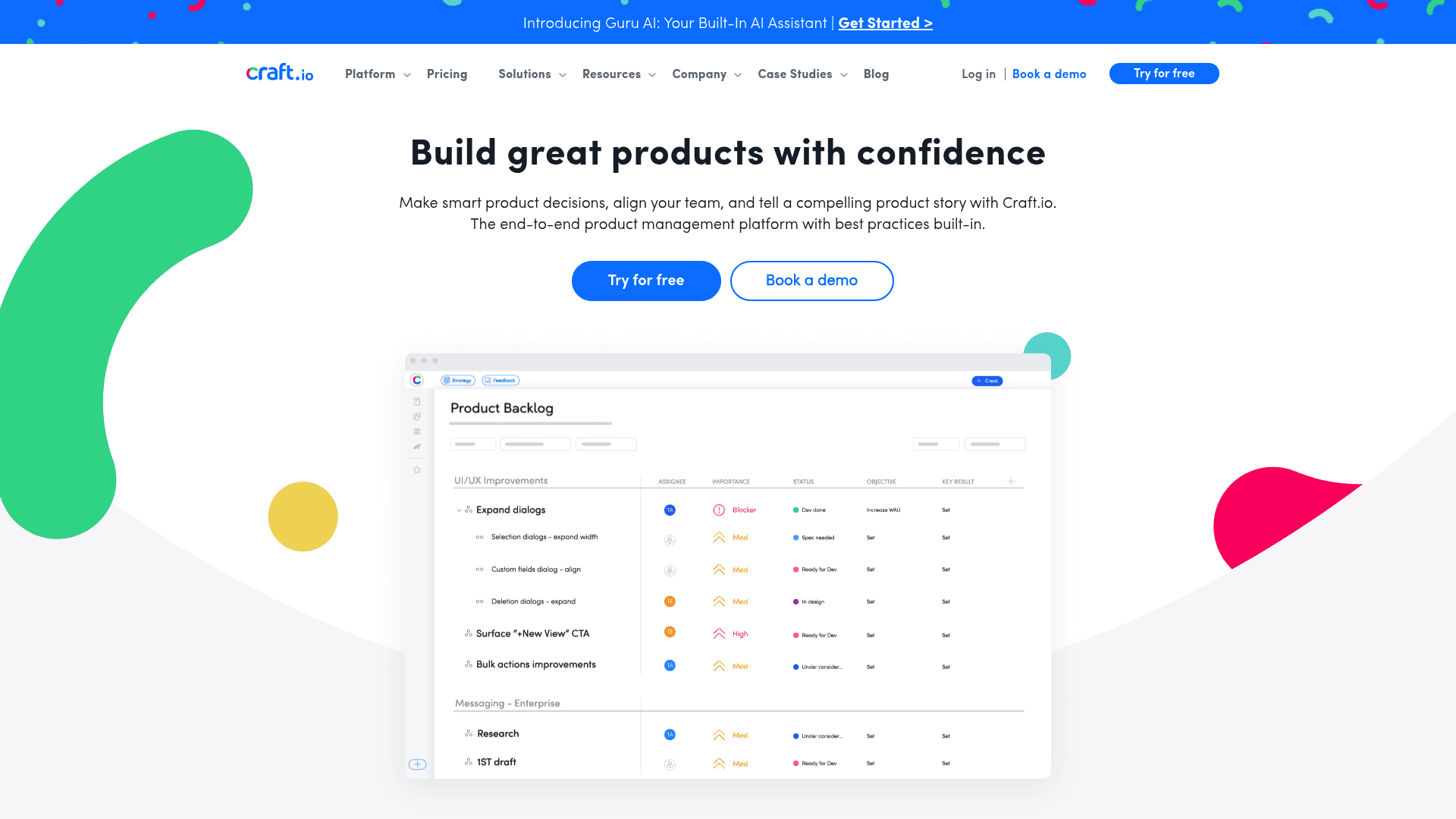
Screenshot of the Craft.io homepage, a product management tool for which users may seek an alternative to Craft.io.
At its heart, Craft.io is a comprehensive product management platform. It’s designed to help teams manage the entire product lifecycle in one place. You get tools for everything from sketching out high-level strategy and gathering feedback to defining features, prioritizing work, and building roadmaps.
It positions itself as a single source of truth with best practices built-in, aiming to pull all your product activities into a central hub. Teams use it to map out their vision, connect OKRs to specific initiatives, and sync with development tools like Jira to monitor execution.
As teams grow and their needs change, some find that this all-in-one approach leads them to explore alternatives. The search for more specialized or flexible workflows often leads teams to look for other options.
Common reasons for seeking an alternative
While Craft.io is packed with features, users sometimes run into challenges that can impact their strategic focus. These points are often what initiate the search for a new tool.
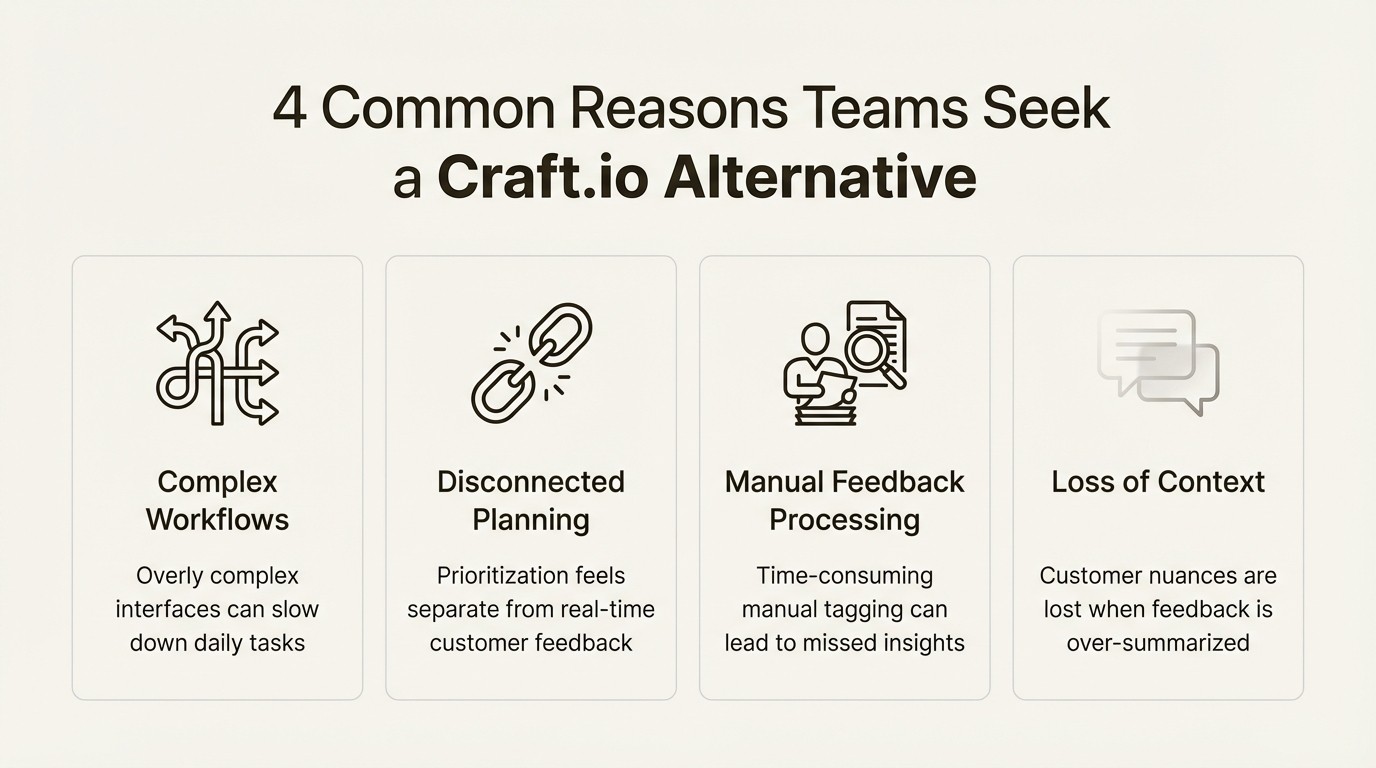
An infographic detailing the common reasons teams look for an alternative to Craft.io, including complex workflows and disconnected planning.
Complex workflows
Some users of comprehensive, all-in-one platforms report challenges with user interfaces that can feel complex. This can add friction to daily tasks. When product managers spend significant time navigating the tool just to create a simple roadmap or update a priority, it can impact efficiency. This is where a platform like Lane comes in. It's built with a clean interface designed for speed and clarity, allowing teams to focus on decision-making.
Disconnected planning and prioritization
Making good prioritization decisions is the core of product management, and it requires direct insight into customer feedback and business context. While Craft.io offers prioritization frameworks like RICE and MoSCoW, some teams find these can be disconnected from other data sources. For instance, key components like the Feedback Portal, OKRs, and Capacity Planning are listed as add-ons for the Pro plan. This structure means that integrating strategic decisions with product data may require specific plan levels. Alternatives may offer context-rich prioritization as a core feature, weaving together customer feedback, revenue data, and strategic goals into one unified workflow.
Manual versus automated processing
Manually processing large volumes of customer feedback can be time-consuming. While Craft.io has an AI assistant called Guru AI to help summarize items or generate briefs, users may still need to manually process, tag, and categorize incoming feedback. This can be a time-intensive task for product managers. In contrast, Lane’s built-in intelligence acts as an automated layer over your feedback. It uses AI to automatically determine sentiment, identify the type of insight (such as a bug, a feature request, or praise), and surface key themes. This can help save time and ensure important customer insights are not missed.
Loss of feedback context
Customer feedback can sometimes lose its original context as it moves through different systems. The nuance of a customer's problem or a support conversation can be reduced to a summary, a potential downside that leads users to seek an alternative to Craft.io. An alternative should aim to solve this by capturing the entire conversation. For example, Lane’s integration with Slack doesn't just grab a summary; it captures the full thread. This ensures the authentic voice of the customer is preserved.
What to look for in a modern alternative
When you’re ready to make a change, it’s not just about finding a tool with a different logo. You need to know what to look for. A modern product management tool should do more than just store your data; it should actively help you make better, faster decisions.
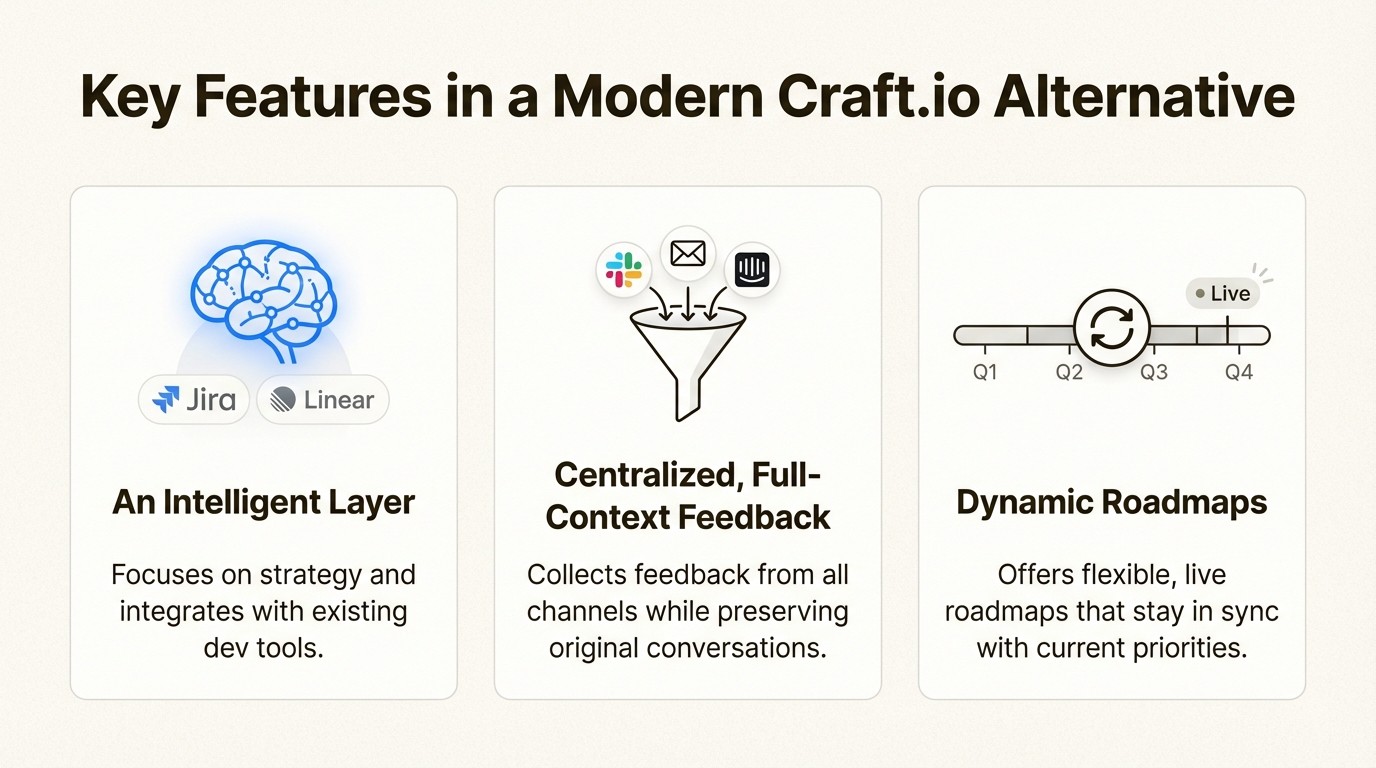
An infographic showing key features to look for in an alternative to Craft.io, such as an intelligent layer, centralized feedback, and dynamic roadmaps.
An intelligent layer, not a project manager
Many product tools aim to cover both strategic planning and project execution, which can sometimes result in a less specialized experience in each area. Many modern platforms recognize that your team probably already has powerful execution tools they use, like Jira or Linear. Instead of trying to replace them, they work with them.
Look for a solution that acts as an "intelligent layer" on top of your development tools. This is the core idea behind Lane. It’s focused on helping you decide what to build, and then it seamlessly pushes that work into your team’s existing workflow.
Centralized feedback with full context
Look for a tool that offers more than just summaries of customer feedback. The real value is in the details. A powerful alternative should pull in feedback from every channel, whether it’s an email from a key customer, an Intercom chat, or a long Slack thread, and preserve original context. This means that when you’re looking at a feature request months later, you can see the exact words the customer used and understand the problem they were trying to solve.
Dynamic roadmaps
Static roadmaps can quickly become outdated. A modern product tool should offer dynamic, living roadmaps that are always in sync with your latest priorities. Look for a tool that gives you flexible options, like Timeline roadmaps for planning releases and the ability to share clean, public-facing versions with your customers. This is a key feature in Lane that makes it easy to keep customers, stakeholders, and your own team aligned.
A look at top alternatives
The product management tools market includes a few key players that are often part of the conversation. Here’s a quick rundown of how they stack up and where a tool like Lane fits in.
Aha!
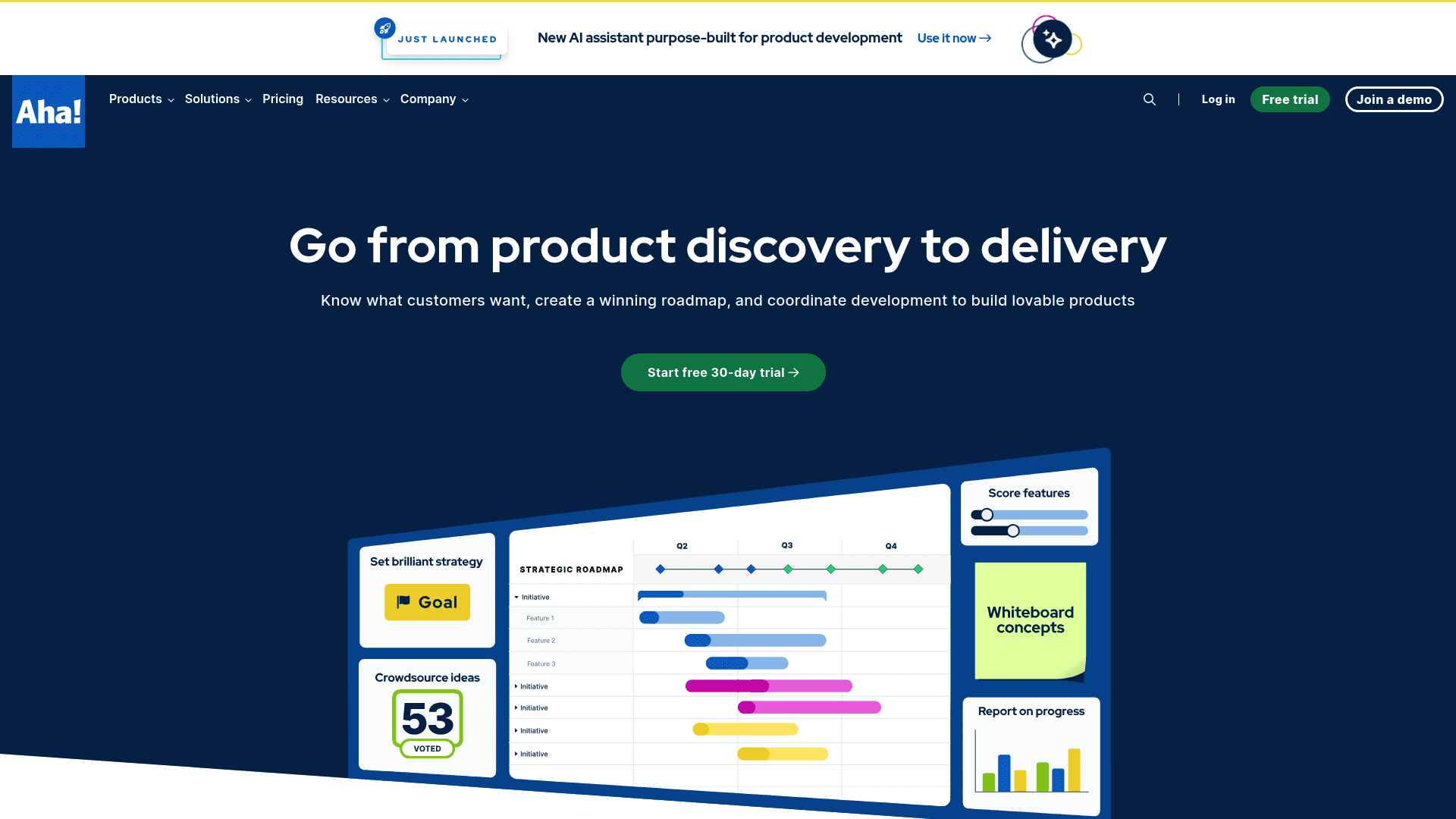
A screenshot of the Aha! homepage, a potential alternative to Craft.io for product management.
Overview: Aha! is a well-established name in the product management space, calling itself the "World's #1 Product Development Software." It has expanded from a roadmapping tool into a full suite, including Aha! Roadmaps, Discovery, Ideas, and Aha! Develop for engineering teams.
Best for: Large enterprise companies that need a comprehensive, all-in-one solution to manage complex projects across many departments. It’s used by over 1,000,000 product builders and has the feature depth to match, but that complexity may require resources to manage.
Limitations: Its extensive feature set may result in a user experience that some teams find complex. It's also one of the pricier options, with the core Aha! Roadmaps plan starting at $59 per user per month.
Productboard
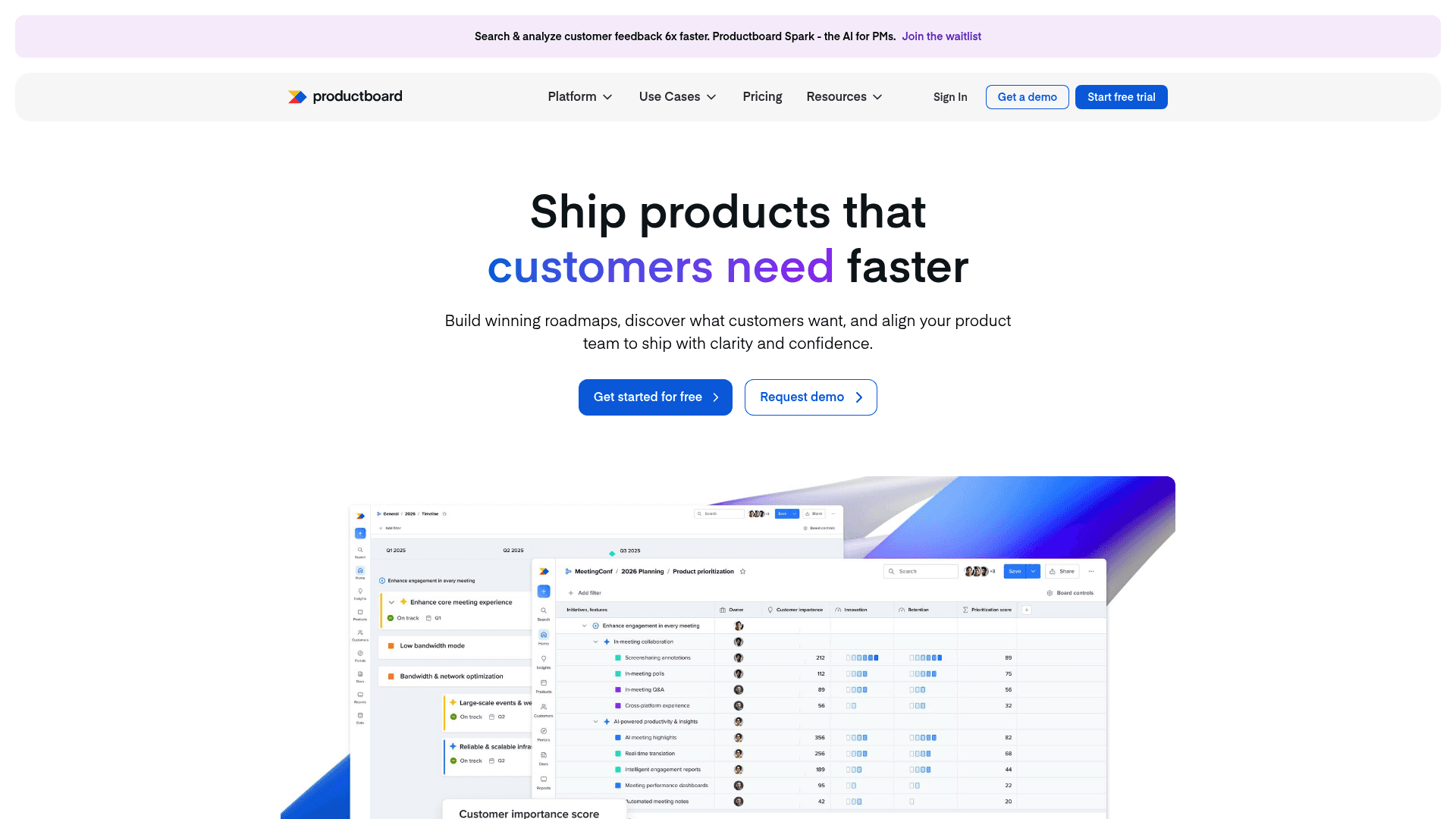
A screenshot of the Productboard homepage, a customer-centric alternative to Craft.io.
Overview: Productboard is a well-known "customer-centric system" that focuses on capturing and organizing user feedback. Used by over 6,000 teams, it’s a good option for creating a central place to consolidate insights and connect them to feature ideas.
Best for: Teams whose biggest challenge is organizing a high volume of customer feedback from many different sources.
Limitations: While it’s strong on the feedback side, it can be less flexible in other areas. The platform is often described as "opinionated," meaning it guides users toward a specific way of working that might not fit every team. It also does not include a native capacity planning functionality, a feature its users have requested. The lower-priced plans also have limits on how many feedback notes you can process.
Lane
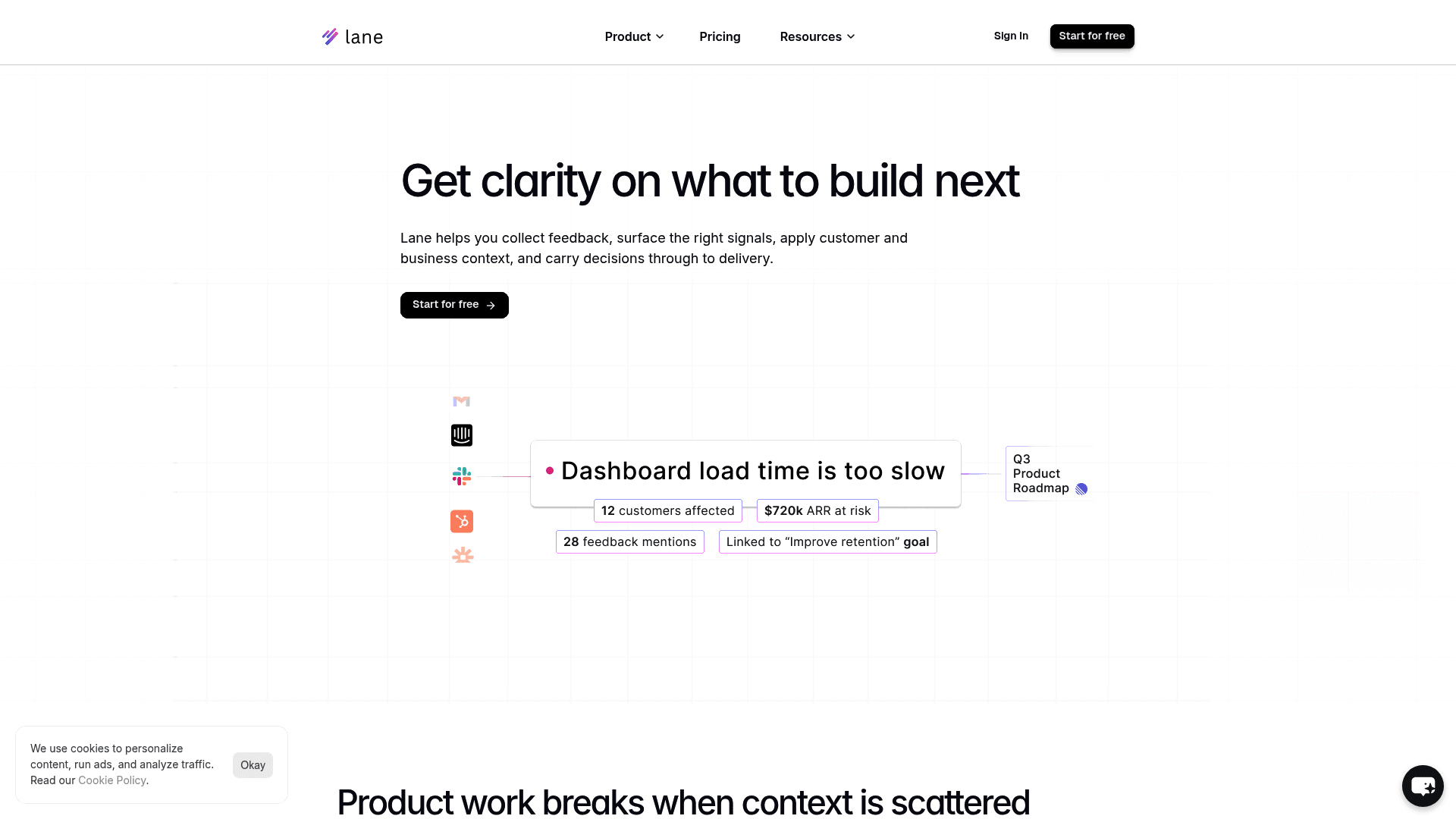
A screenshot of the Lane homepage, a modern alternative to Craft.io for startups and SMBs.
Overview: Lane is designed for startups and SMBs aiming to connect customer feedback with business strategy. It works as an intelligent, strategic layer that complements your existing workflow in tools your team already uses, like Linear or Jira.
Best for: Fast-moving product teams that need to make data-informed decisions quickly. It’s a good fit for building a product culture centered around customer insights and business impact.
Why it's an alternative to Craft.io: Lane was designed to address common pain points users may face with other tools. It offers a streamlined UI, automated AI insights, full-context feedback capture, and integration with development tools. Its focus on being a strategic layer means it enhances your workflow.
Pricing comparison
Of course, price is a huge factor. Here’s a quick look at how these tools compare when you pay annually.
Tool | Starting Price (Annual) | Key Limitations / Notes |
|---|---|---|
Craft.io | $19 per editor/month | Key features are add-ons for the Pro plan, potentially increasing the total cost. |
Aha! | $59 per user/month (Roadmaps plan) | Higher entry price; costs can increase with additional products. |
Productboard | $19 per maker/month (Essentials plan) | Limited to just 250 feedback notes. The $59/month Pro plan is needed for unlimited notes. |
Lane | $0 (Starter Plan) / $19 per user/month (Business Plan) | The free Starter plan is great for small teams and supports up to 3 collaborators. The Business plan gives you unlimited insights. |
Discover a review of the Craft app and see how it stacks up as a powerful alternative to other popular tools.
Making an informed decision
Choosing the right product management tool is about more than a list of features. It’s about finding a platform that empowers your team to do their best work. While Craft.io offers a broad toolkit, teams looking for different approaches to workflow flexibility and automated intelligence might explore other options.
Alternatives like Lane are designed with these considerations in mind. It provides an intelligent, connected, and intuitive hub for all your strategic product work. It helps teams connect their backlog to customer needs and business goals.
For teams looking for a tool that connects feedback to strategy, Lane is one available option.
Frequently asked questions
Q1: What are the main signs that I need an alternative to Craft.io?
A1: The most common signs are feeling like your workflows have become inefficient, finding that prioritization and planning feel separated from customer feedback, and spending significant time manually processing insights instead of focusing on strategy.
Q2: What should I prioritize when choosing an alternative to Craft.io?
A2: Look for a tool that acts as an "intelligent layer" on top of your existing development tools, not a replacement for them. Prioritize strong feedback management that preserves full context, AI-powered automation to surface insights, and dynamic roadmaps that keep everyone aligned.
Q3: How does an alternative to Craft.io like Lane handle customer feedback differently?
A3: Lane captures the full context of feedback, such as entire Slack threads, not just summaries. It also uses built-in AI to automatically analyze sentiment, classify the feedback type (like a bug or feature request), and identify key themes, which can save teams time on manual work.
Q4: Is there a free alternative to Craft.io for small teams?
A4: Yes, there are. For example, Lane offers a free Starter plan that supports up to 3 collaborators and includes core features like AI-powered insights and a board-style roadmap. It's a great option for startups and small teams just getting started.
Q5: Can an alternative to Craft.io integrate with my existing development tools like Jira?
A5: Yes, modern alternatives like Lane are designed to integrate with the tools your engineering team already uses, such as Jira and Linear. This allows you to push strategic decisions directly into your development workflow.
Q6: Why is preserving the full context of feedback so important for an alternative to Craft.io?
A6: Preserving the full context ensures that the customer's true voice, nuance, and intent are not lost when an insight is captured. This allows product managers to make much more informed decisions because they understand the "why" behind a request, not just the "what."
It’s a story most scaling product teams know well. The tool that once felt like a perfect fit may no longer meet all of a team's evolving needs. Workflows may become less efficient, the data you need can feel scattered, and you may find yourself spending more time managing the software than on strategic product decisions.
If you're using Craft.io, this might sound familiar. While it’s built to be an end-to-end product management platform, many teams find themselves looking for an alternative to Craft.io that offers different capabilities in flexibility and intelligence to suit their current processes.
This guide is for you. We’ll go over the common reasons teams start looking for a new solution, what to look for in a replacement, and how a new generation of tools can help you connect your product strategy directly to customer needs.
What is Craft.io?
Screenshot of the Craft.io homepage, a product management tool for which users may seek an alternative to Craft.io.
At its heart, Craft.io is a comprehensive product management platform. It’s designed to help teams manage the entire product lifecycle in one place. You get tools for everything from sketching out high-level strategy and gathering feedback to defining features, prioritizing work, and building roadmaps.
It positions itself as a single source of truth with best practices built-in, aiming to pull all your product activities into a central hub. Teams use it to map out their vision, connect OKRs to specific initiatives, and sync with development tools like Jira to monitor execution.
As teams grow and their needs change, some find that this all-in-one approach leads them to explore alternatives. The search for more specialized or flexible workflows often leads teams to look for other options.
Common reasons for seeking an alternative
While Craft.io is packed with features, users sometimes run into challenges that can impact their strategic focus. These points are often what initiate the search for a new tool.
An infographic detailing the common reasons teams look for an alternative to Craft.io, including complex workflows and disconnected planning.
Complex workflows
Some users of comprehensive, all-in-one platforms report challenges with user interfaces that can feel complex. This can add friction to daily tasks. When product managers spend significant time navigating the tool just to create a simple roadmap or update a priority, it can impact efficiency. This is where a platform like Lane comes in. It's built with a clean interface designed for speed and clarity, allowing teams to focus on decision-making.
Disconnected planning and prioritization
Making good prioritization decisions is the core of product management, and it requires direct insight into customer feedback and business context. While Craft.io offers prioritization frameworks like RICE and MoSCoW, some teams find these can be disconnected from other data sources. For instance, key components like the Feedback Portal, OKRs, and Capacity Planning are listed as add-ons for the Pro plan. This structure means that integrating strategic decisions with product data may require specific plan levels. Alternatives may offer context-rich prioritization as a core feature, weaving together customer feedback, revenue data, and strategic goals into one unified workflow.
Manual versus automated processing
Manually processing large volumes of customer feedback can be time-consuming. While Craft.io has an AI assistant called Guru AI to help summarize items or generate briefs, users may still need to manually process, tag, and categorize incoming feedback. This can be a time-intensive task for product managers. In contrast, Lane’s built-in intelligence acts as an automated layer over your feedback. It uses AI to automatically determine sentiment, identify the type of insight (such as a bug, a feature request, or praise), and surface key themes. This can help save time and ensure important customer insights are not missed.
Loss of feedback context
Customer feedback can sometimes lose its original context as it moves through different systems. The nuance of a customer's problem or a support conversation can be reduced to a summary, a potential downside that leads users to seek an alternative to Craft.io. An alternative should aim to solve this by capturing the entire conversation. For example, Lane’s integration with Slack doesn't just grab a summary; it captures the full thread. This ensures the authentic voice of the customer is preserved.
What to look for in a modern alternative
When you’re ready to make a change, it’s not just about finding a tool with a different logo. You need to know what to look for. A modern product management tool should do more than just store your data; it should actively help you make better, faster decisions.
An infographic showing key features to look for in an alternative to Craft.io, such as an intelligent layer, centralized feedback, and dynamic roadmaps.
An intelligent layer, not a project manager
Many product tools aim to cover both strategic planning and project execution, which can sometimes result in a less specialized experience in each area. Many modern platforms recognize that your team probably already has powerful execution tools they use, like Jira or Linear. Instead of trying to replace them, they work with them.
Look for a solution that acts as an "intelligent layer" on top of your development tools. This is the core idea behind Lane. It’s focused on helping you decide what to build, and then it seamlessly pushes that work into your team’s existing workflow.
Centralized feedback with full context
Look for a tool that offers more than just summaries of customer feedback. The real value is in the details. A powerful alternative should pull in feedback from every channel, whether it’s an email from a key customer, an Intercom chat, or a long Slack thread, and preserve original context. This means that when you’re looking at a feature request months later, you can see the exact words the customer used and understand the problem they were trying to solve.
Dynamic roadmaps
Static roadmaps can quickly become outdated. A modern product tool should offer dynamic, living roadmaps that are always in sync with your latest priorities. Look for a tool that gives you flexible options, like Timeline roadmaps for planning releases and the ability to share clean, public-facing versions with your customers. This is a key feature in Lane that makes it easy to keep customers, stakeholders, and your own team aligned.
A look at top alternatives
The product management tools market includes a few key players that are often part of the conversation. Here’s a quick rundown of how they stack up and where a tool like Lane fits in.
Aha!
A screenshot of the Aha! homepage, a potential alternative to Craft.io for product management.
Overview: Aha! is a well-established name in the product management space, calling itself the "World's #1 Product Development Software." It has expanded from a roadmapping tool into a full suite, including Aha! Roadmaps, Discovery, Ideas, and Aha! Develop for engineering teams.
Best for: Large enterprise companies that need a comprehensive, all-in-one solution to manage complex projects across many departments. It’s used by over 1,000,000 product builders and has the feature depth to match, but that complexity may require resources to manage.
Limitations: Its extensive feature set may result in a user experience that some teams find complex. It's also one of the pricier options, with the core Aha! Roadmaps plan starting at $59 per user per month.
Productboard
A screenshot of the Productboard homepage, a customer-centric alternative to Craft.io.
Overview: Productboard is a well-known "customer-centric system" that focuses on capturing and organizing user feedback. Used by over 6,000 teams, it’s a good option for creating a central place to consolidate insights and connect them to feature ideas.
Best for: Teams whose biggest challenge is organizing a high volume of customer feedback from many different sources.
Limitations: While it’s strong on the feedback side, it can be less flexible in other areas. The platform is often described as "opinionated," meaning it guides users toward a specific way of working that might not fit every team. It also does not include a native capacity planning functionality, a feature its users have requested. The lower-priced plans also have limits on how many feedback notes you can process.
Lane
A screenshot of the Lane homepage, a modern alternative to Craft.io for startups and SMBs.
Overview: Lane is designed for startups and SMBs aiming to connect customer feedback with business strategy. It works as an intelligent, strategic layer that complements your existing workflow in tools your team already uses, like Linear or Jira.
Best for: Fast-moving product teams that need to make data-informed decisions quickly. It’s a good fit for building a product culture centered around customer insights and business impact.
Why it's an alternative to Craft.io: Lane was designed to address common pain points users may face with other tools. It offers a streamlined UI, automated AI insights, full-context feedback capture, and integration with development tools. Its focus on being a strategic layer means it enhances your workflow.
Pricing comparison
Of course, price is a huge factor. Here’s a quick look at how these tools compare when you pay annually.
Tool | Starting Price (Annual) | Key Limitations / Notes |
|---|---|---|
Craft.io | $19 per editor/month | Key features are add-ons for the Pro plan, potentially increasing the total cost. |
Aha! | $59 per user/month (Roadmaps plan) | Higher entry price; costs can increase with additional products. |
Productboard | $19 per maker/month (Essentials plan) | Limited to just 250 feedback notes. The $59/month Pro plan is needed for unlimited notes. |
Lane | $0 (Starter Plan) / $19 per user/month (Business Plan) | The free Starter plan is great for small teams and supports up to 3 collaborators. The Business plan gives you unlimited insights. |
Discover a review of the Craft app and see how it stacks up as a powerful alternative to other popular tools.
Making an informed decision
Choosing the right product management tool is about more than a list of features. It’s about finding a platform that empowers your team to do their best work. While Craft.io offers a broad toolkit, teams looking for different approaches to workflow flexibility and automated intelligence might explore other options.
Alternatives like Lane are designed with these considerations in mind. It provides an intelligent, connected, and intuitive hub for all your strategic product work. It helps teams connect their backlog to customer needs and business goals.
For teams looking for a tool that connects feedback to strategy, Lane is one available option.
Frequently asked questions
Q1: What are the main signs that I need an alternative to Craft.io?
A1: The most common signs are feeling like your workflows have become inefficient, finding that prioritization and planning feel separated from customer feedback, and spending significant time manually processing insights instead of focusing on strategy.
Q2: What should I prioritize when choosing an alternative to Craft.io?
A2: Look for a tool that acts as an "intelligent layer" on top of your existing development tools, not a replacement for them. Prioritize strong feedback management that preserves full context, AI-powered automation to surface insights, and dynamic roadmaps that keep everyone aligned.
Q3: How does an alternative to Craft.io like Lane handle customer feedback differently?
A3: Lane captures the full context of feedback, such as entire Slack threads, not just summaries. It also uses built-in AI to automatically analyze sentiment, classify the feedback type (like a bug or feature request), and identify key themes, which can save teams time on manual work.
Q4: Is there a free alternative to Craft.io for small teams?
A4: Yes, there are. For example, Lane offers a free Starter plan that supports up to 3 collaborators and includes core features like AI-powered insights and a board-style roadmap. It's a great option for startups and small teams just getting started.
Q5: Can an alternative to Craft.io integrate with my existing development tools like Jira?
A5: Yes, modern alternatives like Lane are designed to integrate with the tools your engineering team already uses, such as Jira and Linear. This allows you to push strategic decisions directly into your development workflow.
Q6: Why is preserving the full context of feedback so important for an alternative to Craft.io?
A6: Preserving the full context ensures that the customer's true voice, nuance, and intent are not lost when an insight is captured. This allows product managers to make much more informed decisions because they understand the "why" behind a request, not just the "what."
Expected a CTA? We're are working on it.
If you are still not convinced, give lane a try yourself.
Expected a CTA? We're are working on it.
If you are still not convinced, give lane a try yourself.