Jan 5, 2026

Articles

Why a single source of truth is crucial for your business strategy

Discover the best B2B product management platform for small SaaS companies to build the right roadmap.

Picture this: your marketing team is popping the champagne, celebrating a 15% jump in sign-ups. At the same time, the product team is scratching their heads over a troubling dip in user engagement. To top it off, finance is questioning both figures because the revenue just doesn't seem to line up. Sound familiar?

This is a classic case of data silos, a problem that pops up when different teams operate from their own separate sets of data. It’s a common headache. Many companies struggle to organize multiple data sources, which tanks collaboration and leads to painfully inaccurate data.

This guide is here to help. We'll walk through what a single source of truth (SSOT) actually is, dig into the real costs of ignoring it, and lay out the practical steps to establish one. The goal is to help you move from confusion to clarity, drive better alignment, and make smarter decisions that actually grow your business.

What is a single source of truth (SSOT)?

What exactly is a single source of truth (SSOT)? Put simply, it’s the idea that everyone in an organization bases their business decisions on the same data. It’s not about forcing everyone onto one magical, all-knowing tool. Instead, it’s about creating a centralized, reliable data foundation that the entire company can access and trust.

The main goal here is to put an end to the endless debates over which numbers are "correct." Instead of the marketing department pulling one metric from their dashboard and sales pulling a conflicting one from theirs, everyone works from the same unified source for all their data needs.

This gives decision-makers a much clearer and more accurate picture of the business. It allows them to choose the right tools and strategies to move forward with real confidence. An SSOT makes sure that your data is a reliable asset that can be used by anyone, across the whole organization.
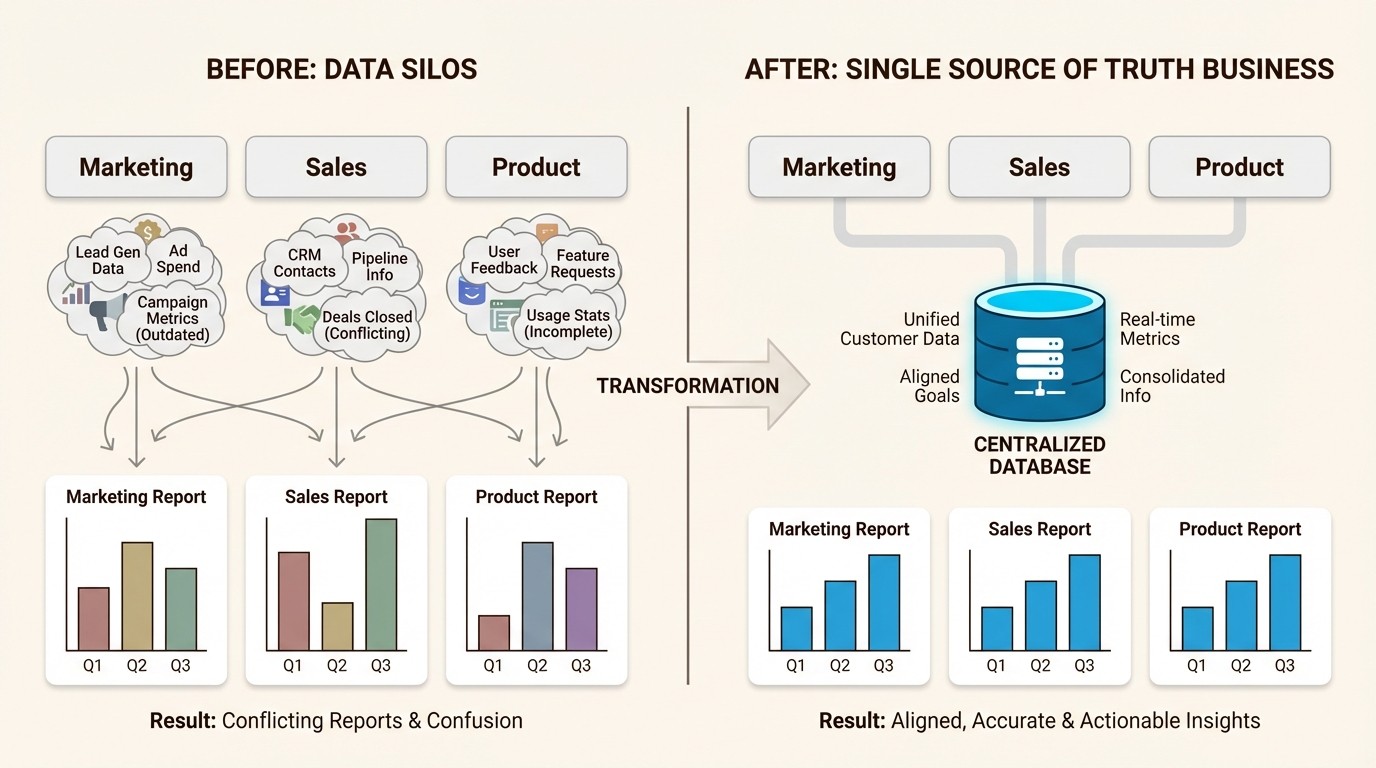
An infographic comparing data silos with a single source of truth business model, showing how unified data leads to aligned reporting.

An infographic comparing data silos with a single source of truth business model, showing how unified data leads to aligned reporting.

The hidden costs of not having a single source of truth

Without a single source of truth, businesses often watch collaboration break down and progress grind to a halt. This data chaos comes with some pretty significant, though often hidden, costs.

How data silos prevent a single source of truth

When data lives in separate, disconnected systems, critical information gets trapped. For product teams, this means valuable feedback is scattered across various channels like Slack. Meanwhile, your sales team has a goldmine of customer data locked away in their CRM, completely siloed from everyone else.

This fragmentation means no one ever sees the full picture. The product team might be building a new feature, completely unaware of the deal-blocking issues that the sales team hears about every single day. This leads to a massive disconnect and an incomplete understanding of what customers truly need.

How inconsistent metrics erode trust

It gets worse when different teams start defining key metrics in their own unique ways. This inevitably leads to contradictory reports that just create confusion and friction. Instead of acting on insights, companies often spend way too much time debating which set of numbers is actually correct.

This constant back-and-forth does more than just waste time; it completely undermines trust in all data. Leadership is left paralyzed, unsure of which version of reality to believe. When you can't trust your numbers, making strategic decisions feels like taking a shot in the dark.

Inefficient workflows and wasted resources

Think about the sheer amount of time your teams waste just trying to get the data they need. They're manually pulling reports from different sources, painstakingly cleaning the data, and then trying to reconcile all the discrepancies. It's a huge time sink.

An effective SSOT can dramatically cut down the time spent on this kind of "data janitorial work." Instead of hunting down and arguing over data, your teams can finally focus their energy on what they were hired to do: solving real problems and moving the business forward.

How to establish a single source of truth

Building a single source of truth for your business isn't a quick fix; it's a project that needs a clear, step-by-step plan. You're not just buying a tool, you're creating a reliable data foundation for the entire organization.

Here’s a proven approach to get you started:

  1. Get stakeholder buy-in. Before you do anything else, you need to get your leadership team on board. Work with them to agree on which data sources are the most reliable and should be the foundation for a small pilot project.

  2. Identify cross-departmental data needs. Your technical team should chat with people across the company to figure out who needs what data. This is also the time to determine if you need any special permission levels or access controls.

  3. Benchmark data for a specific operation. Don't try to boil the ocean. Start small by focusing on a narrow set of data points for just one business operation. This lets you test and fine-tune the process before a wider rollout.

  4. Ensure everyone is on board. Once you have your data sources defined and ready to track, communicate the new process clearly to all the relevant teams. Make sure everyone understands how to access the data and why this change is happening.

  5. Provide secure and easy access. The new system is useless if no one can get to it. Make sure all the right people can securely access the data they need to do their jobs effectively without jumping through a bunch of hoops.

  6. Triple-check compliance requirements. Any time you change how data is organized and accessed, you might run into compliance issues. Diligently review all requirements (like GDPR or CCPA) to make sure you're staying on the right side of the law.

  7. Roll out the process iteratively. Once your pilot is a success, it's time to expand. Roll out the SSOT process to the next business unit and the next data type in line, building on what you've learned.
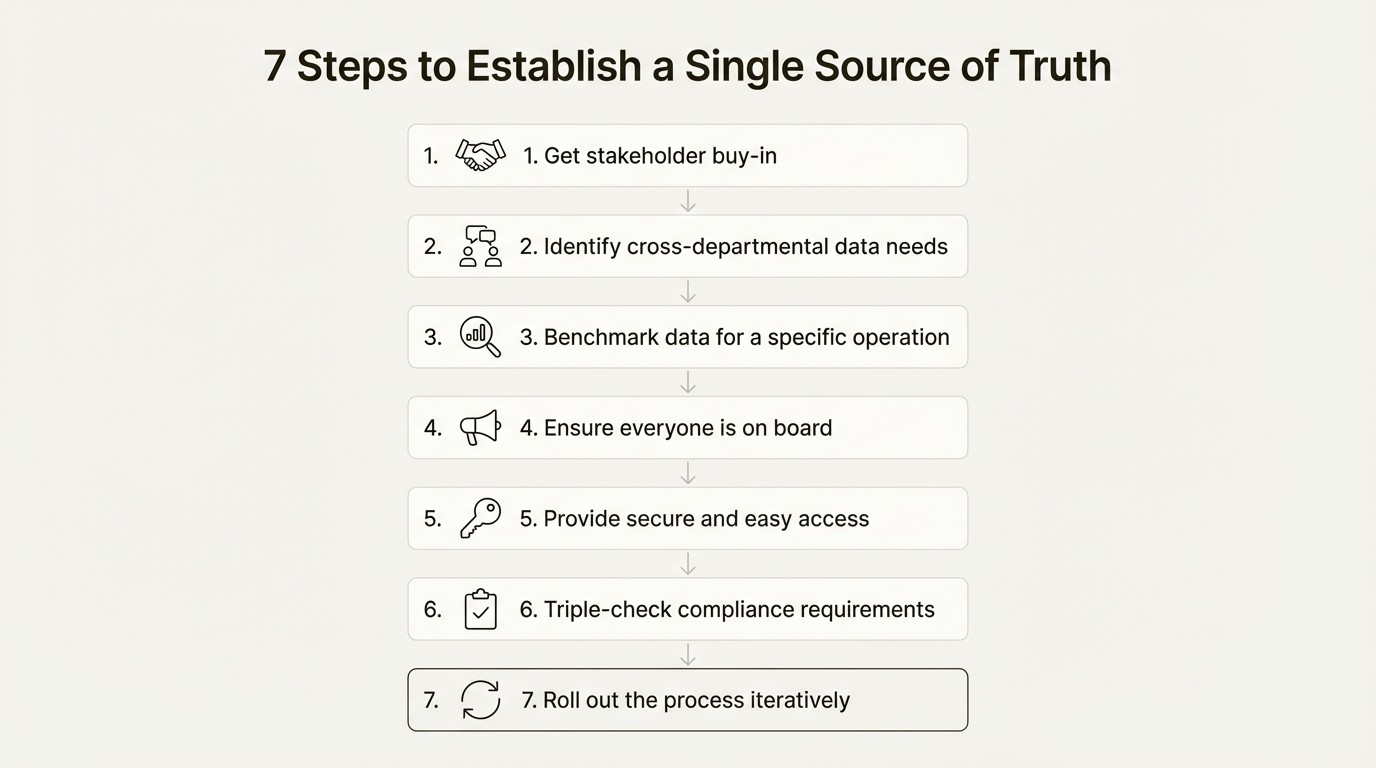
    A workflow showing the 7 steps to create a single source of truth business foundation, starting with stakeholder buy-in and ending with iterative rollout.

A workflow showing the 7 steps to create a single source of truth business foundation, starting with stakeholder buy-in and ending with iterative rollout.

Unifying teams with a single source of truth

A true single source of truth does way more than just clean up your data; it fundamentally changes how your teams work together. By creating a unified view of your business information, it breaks down those frustrating departmental walls and gets everyone rowing in the same direction toward common goals.

Empowering product teams

Problem: Product managers are constantly drowning in a sea of conflicting feedback. Invaluable customer insights are scattered everywhere, lost in Slack DMs, buried in Intercom chats, and hidden in long email threads. By the time that feedback makes it into a backlog (if it ever does), its original context and urgency are almost always gone.
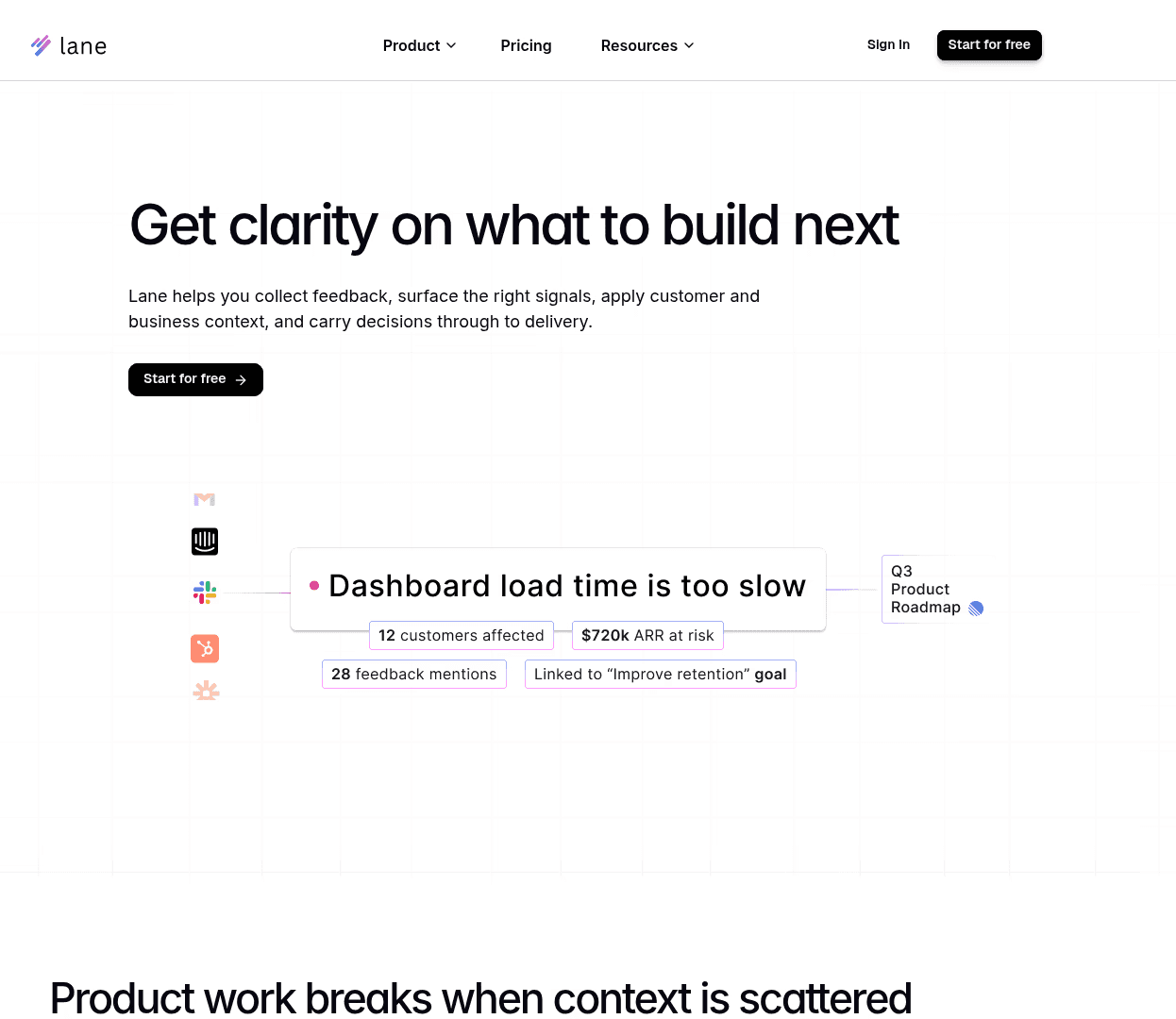
A screenshot of the Lane landing page, a product intelligence tool that helps create a single source of truth business.

A screenshot of the Lane landing page, a product intelligence tool that helps create a single source of truth business.

Solution: An SSOT for product decisions is all about connecting qualitative feedback directly to your strategic goals. A platform like Lane is built to do just this. It creates a central hub by capturing full conversations from all your different sources. Lane's built-in intelligence then automatically organizes all that feedback by type and sentiment, surfacing clear patterns so your roadmap is driven by what customers are actually saying, not just guesswork.

Aligning sales and marketing

Problem: Feedback from the sales team often feels incredibly urgent, but it isn't always important for the broader product strategy. Most of the time, their requests are focused on closing one specific deal, not necessarily on building a better product for everyone.

Solution: An SSOT helps you structure that sales feedback and tie it directly to business impact. By linking feature requests to revenue data and customer segments, your teams can finally start to see recurring patterns from your most valuable accounts. This allows them to measure the true ROI of their efforts and prioritize opportunities that will drive long-term growth.

Integrating support feedback

Problem: Your customer support team is on the front lines, dealing with critical feature requests and bug reports every single day. But too often, that feedback gets lost in transit or is stripped of its context, making it nearly impossible for product teams to understand the real problem.

Solution: An SSOT ensures that this crucial feedback loop is never broken. With a tool like Lane, your support team can capture issues with the full context still attached. Lane then connects this feedback directly to product opportunities, guaranteeing that the voice of the customer directly influences prioritization. This keeps your teams perfectly aligned on what to build next to make customers happier and reduce churn.

Tools for building your single source of truth

The right tool for building your SSOT really depends on what kind of "truth" you're trying to centralize. A tool that's great for organizing internal documents won't help you much with customer feedback. Here are a few common approaches, with transparent pricing based on 2026 data.

Tool Category

Best For

Example(s)

Typical Pricing

Centralized Knowledge Bases

Creating an SSOT for internal documentation, processes, and team knowledge.

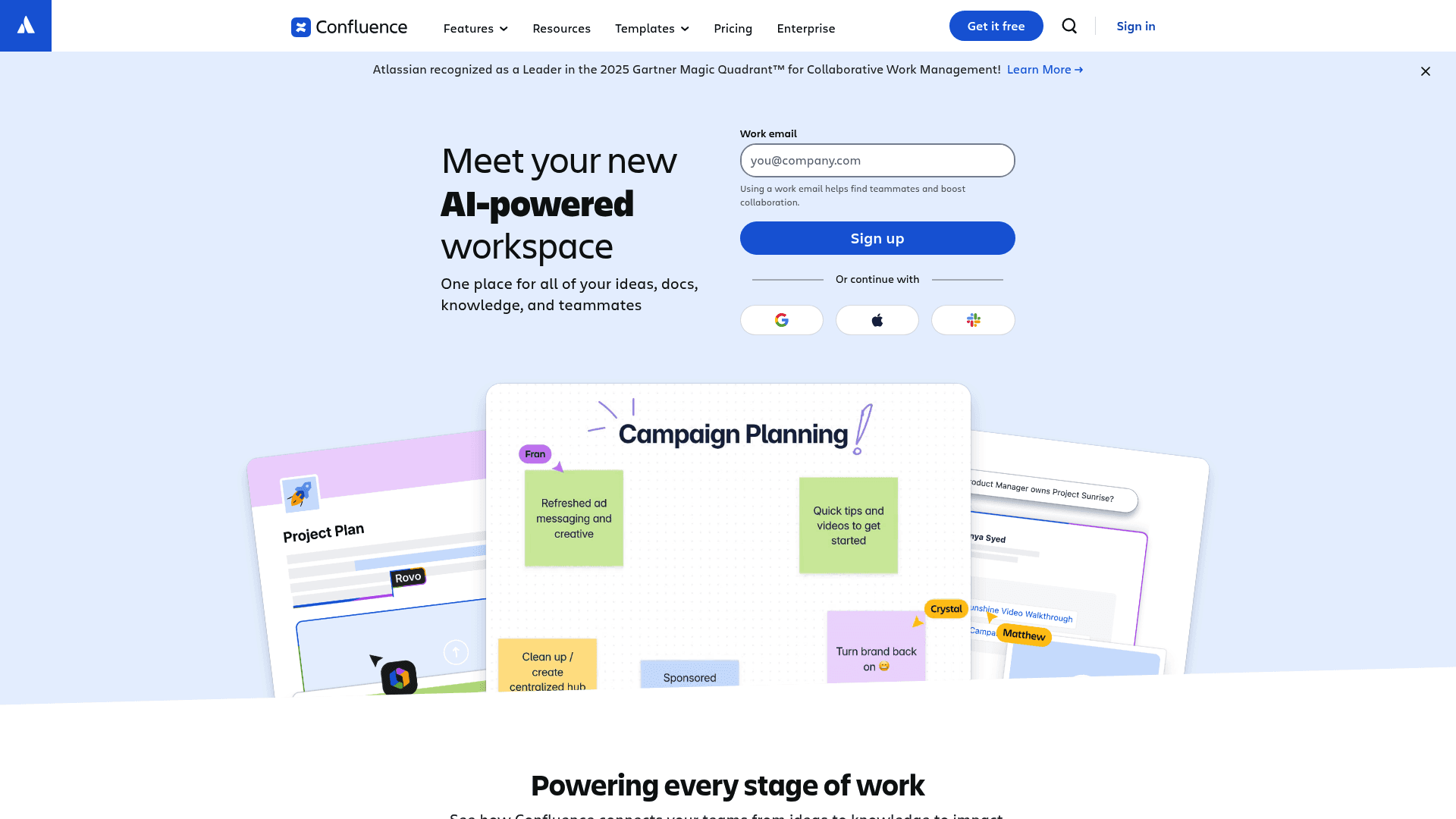
Confluence

Free: Up to 10 users.
Standard: Starts at $5.42/user/month.
Premium: Starts at $10.44/user/month.

Data Integration & BI Platforms

Building a technical SSOT (like a data warehouse) for company-wide reporting and business intelligence.

Talend, ThoughtSpot

Talend: Custom, quote-based.
ThoughtSpot: Starts at $25/user/month for Essentials plan. Custom for Enterprise.

Product Intelligence Platforms

Establishing an SSOT for product strategy, unifying customer feedback, prioritization, and roadmaps.

Lane

Starter: $0 for up to 3 users and 100 insights.
Business: $19/user/month with unlimited insights and advanced features.


A screenshot of the Atlassian Confluence homepage, a tool for building a single source of truth business knowledge base.

A screenshot of the Atlassian Confluence homepage, a tool for building a single source of truth business knowledge base.

Seeing these concepts in action can help solidify your understanding. The following video provides a concise explanation of what a single source of truth means and how it can empower your business.

This animated explainer defines a Single Source of Truth (SSOT) and its importance for business decision-making.

From data chaos to strategic clarity

In today's world, a single source of truth is no longer a "nice-to-have." It is a necessity for any business that wants to be truly data-driven. It breaks down silos, boosts efficiency, and gives your leaders the confidence they need to make smart, decisive calls that move the needle.

Remember, creating an SSOT isn't a one-and-done project. It's an ongoing journey that combines good data governance, the right technology, and a company culture that values collaboration and transparency.

If your organization's biggest struggle is creating a single source of truth for what to build next, a purpose-built platform is your fastest path to clarity. Lane provides the intelligent layer that connects customer needs directly to your product strategy, ensuring your entire team is aligned and building with maximum impact.


Frequently Asked Questions

What is the first step to creating a single source of truth?

The first step is getting your leadership team on board. You need their buy-in to agree on which data sources are the most reliable and to support a small pilot project before you roll it out company-wide.

How does a single source of truth improve team collaboration?

It eliminates arguments over which data is "correct." When everyone from marketing to product to sales works from the same unified data, they can align on common goals, share insights freely, and make decisions together instead of in silos.

Can small businesses benefit from a single source of truth?

Absolutely. In fact, establishing a single source of truth early on can prevent the data chaos that often comes with growth. It helps small teams stay aligned, make smarter decisions quickly, and build a solid foundation for scaling up.

What are the biggest challenges when implementing a single source of truth?

The biggest hurdles are often [cultural, not technical](https://www.reddit.com/r/dataengineering/comments/czvqlv/question_how_to_manage_one_source_of_truth_within/). Getting different departments to give up their siloed spreadsheets and agree on unified definitions for key metrics can be tough. It requires clear communication and strong leadership to get everyone on the same page.

What kind of tools do you need for a single source of truth?

It depends on your goal. For internal documents, a knowledge base like Confluence works well. For company-wide reporting, you might use a data integration platform. And for aligning your product strategy around customer feedback, a tool like Lane is designed to create that central hub.

How long does it take to establish a single source of truth?

It's not an overnight fix. Building a true single source of truth is an ongoing process. Starting with a small pilot project for one operation can take a few weeks, but rolling it out across the entire organization is a longer-term initiative that evolves as your business grows.

Picture this: your marketing team is popping the champagne, celebrating a 15% jump in sign-ups. At the same time, the product team is scratching their heads over a troubling dip in user engagement. To top it off, finance is questioning both figures because the revenue just doesn't seem to line up. Sound familiar?

This is a classic case of data silos, a problem that pops up when different teams operate from their own separate sets of data. It’s a common headache. Many companies struggle to organize multiple data sources, which tanks collaboration and leads to painfully inaccurate data.

This guide is here to help. We'll walk through what a single source of truth (SSOT) actually is, dig into the real costs of ignoring it, and lay out the practical steps to establish one. The goal is to help you move from confusion to clarity, drive better alignment, and make smarter decisions that actually grow your business.

What is a single source of truth (SSOT)?

What exactly is a single source of truth (SSOT)? Put simply, it’s the idea that everyone in an organization bases their business decisions on the same data. It’s not about forcing everyone onto one magical, all-knowing tool. Instead, it’s about creating a centralized, reliable data foundation that the entire company can access and trust.

The main goal here is to put an end to the endless debates over which numbers are "correct." Instead of the marketing department pulling one metric from their dashboard and sales pulling a conflicting one from theirs, everyone works from the same unified source for all their data needs.

This gives decision-makers a much clearer and more accurate picture of the business. It allows them to choose the right tools and strategies to move forward with real confidence. An SSOT makes sure that your data is a reliable asset that can be used by anyone, across the whole organization.

An infographic comparing data silos with a single source of truth business model, showing how unified data leads to aligned reporting.

An infographic comparing data silos with a single source of truth business model, showing how unified data leads to aligned reporting.

The hidden costs of not having a single source of truth

Without a single source of truth, businesses often watch collaboration break down and progress grind to a halt. This data chaos comes with some pretty significant, though often hidden, costs.

How data silos prevent a single source of truth

When data lives in separate, disconnected systems, critical information gets trapped. For product teams, this means valuable feedback is scattered across various channels like Slack. Meanwhile, your sales team has a goldmine of customer data locked away in their CRM, completely siloed from everyone else.

This fragmentation means no one ever sees the full picture. The product team might be building a new feature, completely unaware of the deal-blocking issues that the sales team hears about every single day. This leads to a massive disconnect and an incomplete understanding of what customers truly need.

How inconsistent metrics erode trust

It gets worse when different teams start defining key metrics in their own unique ways. This inevitably leads to contradictory reports that just create confusion and friction. Instead of acting on insights, companies often spend way too much time debating which set of numbers is actually correct.

This constant back-and-forth does more than just waste time; it completely undermines trust in all data. Leadership is left paralyzed, unsure of which version of reality to believe. When you can't trust your numbers, making strategic decisions feels like taking a shot in the dark.

Inefficient workflows and wasted resources

Think about the sheer amount of time your teams waste just trying to get the data they need. They're manually pulling reports from different sources, painstakingly cleaning the data, and then trying to reconcile all the discrepancies. It's a huge time sink.

An effective SSOT can dramatically cut down the time spent on this kind of "data janitorial work." Instead of hunting down and arguing over data, your teams can finally focus their energy on what they were hired to do: solving real problems and moving the business forward.

How to establish a single source of truth

Building a single source of truth for your business isn't a quick fix; it's a project that needs a clear, step-by-step plan. You're not just buying a tool, you're creating a reliable data foundation for the entire organization.

Here’s a proven approach to get you started:

  1. Get stakeholder buy-in. Before you do anything else, you need to get your leadership team on board. Work with them to agree on which data sources are the most reliable and should be the foundation for a small pilot project.

  2. Identify cross-departmental data needs. Your technical team should chat with people across the company to figure out who needs what data. This is also the time to determine if you need any special permission levels or access controls.

  3. Benchmark data for a specific operation. Don't try to boil the ocean. Start small by focusing on a narrow set of data points for just one business operation. This lets you test and fine-tune the process before a wider rollout.

  4. Ensure everyone is on board. Once you have your data sources defined and ready to track, communicate the new process clearly to all the relevant teams. Make sure everyone understands how to access the data and why this change is happening.

  5. Provide secure and easy access. The new system is useless if no one can get to it. Make sure all the right people can securely access the data they need to do their jobs effectively without jumping through a bunch of hoops.

  6. Triple-check compliance requirements. Any time you change how data is organized and accessed, you might run into compliance issues. Diligently review all requirements (like GDPR or CCPA) to make sure you're staying on the right side of the law.

  7. Roll out the process iteratively. Once your pilot is a success, it's time to expand. Roll out the SSOT process to the next business unit and the next data type in line, building on what you've learned.

    A workflow showing the 7 steps to create a single source of truth business foundation, starting with stakeholder buy-in and ending with iterative rollout.

A workflow showing the 7 steps to create a single source of truth business foundation, starting with stakeholder buy-in and ending with iterative rollout.

Unifying teams with a single source of truth

A true single source of truth does way more than just clean up your data; it fundamentally changes how your teams work together. By creating a unified view of your business information, it breaks down those frustrating departmental walls and gets everyone rowing in the same direction toward common goals.

Empowering product teams

Problem: Product managers are constantly drowning in a sea of conflicting feedback. Invaluable customer insights are scattered everywhere, lost in Slack DMs, buried in Intercom chats, and hidden in long email threads. By the time that feedback makes it into a backlog (if it ever does), its original context and urgency are almost always gone.

A screenshot of the Lane landing page, a product intelligence tool that helps create a single source of truth business.

A screenshot of the Lane landing page, a product intelligence tool that helps create a single source of truth business.

Solution: An SSOT for product decisions is all about connecting qualitative feedback directly to your strategic goals. A platform like Lane is built to do just this. It creates a central hub by capturing full conversations from all your different sources. Lane's built-in intelligence then automatically organizes all that feedback by type and sentiment, surfacing clear patterns so your roadmap is driven by what customers are actually saying, not just guesswork.

Aligning sales and marketing

Problem: Feedback from the sales team often feels incredibly urgent, but it isn't always important for the broader product strategy. Most of the time, their requests are focused on closing one specific deal, not necessarily on building a better product for everyone.

Solution: An SSOT helps you structure that sales feedback and tie it directly to business impact. By linking feature requests to revenue data and customer segments, your teams can finally start to see recurring patterns from your most valuable accounts. This allows them to measure the true ROI of their efforts and prioritize opportunities that will drive long-term growth.

Integrating support feedback

Problem: Your customer support team is on the front lines, dealing with critical feature requests and bug reports every single day. But too often, that feedback gets lost in transit or is stripped of its context, making it nearly impossible for product teams to understand the real problem.

Solution: An SSOT ensures that this crucial feedback loop is never broken. With a tool like Lane, your support team can capture issues with the full context still attached. Lane then connects this feedback directly to product opportunities, guaranteeing that the voice of the customer directly influences prioritization. This keeps your teams perfectly aligned on what to build next to make customers happier and reduce churn.

Tools for building your single source of truth

The right tool for building your SSOT really depends on what kind of "truth" you're trying to centralize. A tool that's great for organizing internal documents won't help you much with customer feedback. Here are a few common approaches, with transparent pricing based on 2026 data.

Tool Category

Best For

Example(s)

Typical Pricing

Centralized Knowledge Bases

Creating an SSOT for internal documentation, processes, and team knowledge.

Confluence

Free: Up to 10 users.
Standard: Starts at $5.42/user/month.
Premium: Starts at $10.44/user/month.

Data Integration & BI Platforms

Building a technical SSOT (like a data warehouse) for company-wide reporting and business intelligence.

Talend, ThoughtSpot

Talend: Custom, quote-based.
ThoughtSpot: Starts at $25/user/month for Essentials plan. Custom for Enterprise.

Product Intelligence Platforms

Establishing an SSOT for product strategy, unifying customer feedback, prioritization, and roadmaps.

Lane

Starter: $0 for up to 3 users and 100 insights.
Business: $19/user/month with unlimited insights and advanced features.


A screenshot of the Atlassian Confluence homepage, a tool for building a single source of truth business knowledge base.

A screenshot of the Atlassian Confluence homepage, a tool for building a single source of truth business knowledge base.

Seeing these concepts in action can help solidify your understanding. The following video provides a concise explanation of what a single source of truth means and how it can empower your business.

This animated explainer defines a Single Source of Truth (SSOT) and its importance for business decision-making.

From data chaos to strategic clarity

In today's world, a single source of truth is no longer a "nice-to-have." It is a necessity for any business that wants to be truly data-driven. It breaks down silos, boosts efficiency, and gives your leaders the confidence they need to make smart, decisive calls that move the needle.

Remember, creating an SSOT isn't a one-and-done project. It's an ongoing journey that combines good data governance, the right technology, and a company culture that values collaboration and transparency.

If your organization's biggest struggle is creating a single source of truth for what to build next, a purpose-built platform is your fastest path to clarity. Lane provides the intelligent layer that connects customer needs directly to your product strategy, ensuring your entire team is aligned and building with maximum impact.


Frequently Asked Questions

What is the first step to creating a single source of truth?

The first step is getting your leadership team on board. You need their buy-in to agree on which data sources are the most reliable and to support a small pilot project before you roll it out company-wide.

How does a single source of truth improve team collaboration?

It eliminates arguments over which data is "correct." When everyone from marketing to product to sales works from the same unified data, they can align on common goals, share insights freely, and make decisions together instead of in silos.

Can small businesses benefit from a single source of truth?

Absolutely. In fact, establishing a single source of truth early on can prevent the data chaos that often comes with growth. It helps small teams stay aligned, make smarter decisions quickly, and build a solid foundation for scaling up.

What are the biggest challenges when implementing a single source of truth?

The biggest hurdles are often [cultural, not technical](https://www.reddit.com/r/dataengineering/comments/czvqlv/question_how_to_manage_one_source_of_truth_within/). Getting different departments to give up their siloed spreadsheets and agree on unified definitions for key metrics can be tough. It requires clear communication and strong leadership to get everyone on the same page.

What kind of tools do you need for a single source of truth?

It depends on your goal. For internal documents, a knowledge base like Confluence works well. For company-wide reporting, you might use a data integration platform. And for aligning your product strategy around customer feedback, a tool like Lane is designed to create that central hub.

How long does it take to establish a single source of truth?

It's not an overnight fix. Building a true single source of truth is an ongoing process. Starting with a small pilot project for one operation can take a few weeks, but rolling it out across the entire organization is a longer-term initiative that evolves as your business grows.

Expected a CTA? We're are working on it.

If you are still not convinced, give lane a try yourself.

Expected a CTA? We're are working on it.

If you are still not convinced, give lane a try yourself.